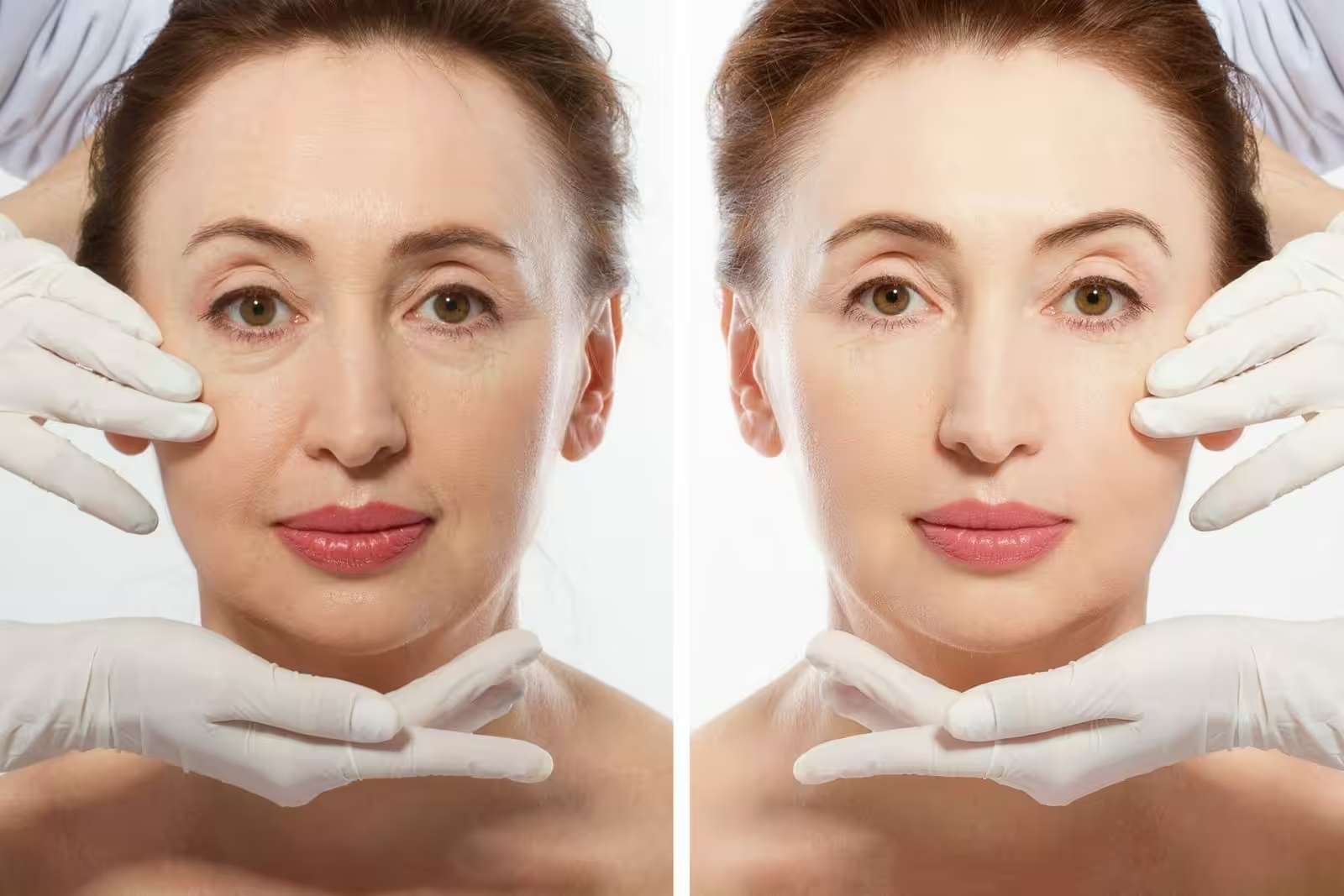
A mini facelift is a shorter-scar, less invasive form of facelift surgery designed for the early to moderate signs of aging in the lower face: mild jowls, a softening jawline, early cheek descent, and deepening folds beside the nose and mouth. Instead of the long incisions and extensive dissection of a full facelift, the surgeon works through a limited incision in front of the ear and repositions the sagging tissues upward, usually with internal sutures, before removing the excess skin.
Because the term “mini facelift” is used loosely, two clinics may mean slightly different operations when they use it. This guide explains what a mini facelift actually involves, who it suits, what recovery looks like, what the research says about results and risks, and what it costs in Turkey compared with other countries.
Mini Facelift at a Glance
| Treatment Summary | Mini Facelift |
|---|---|
| Target area | Lower cheeks, jowls, jawline, and the folds around the nose and mouth |
| Anesthesia | Local anesthesia with sedation, or general anesthesia |
| Procedure time | About 2–3 hours, depending on technique and added procedures |
| Hospital stay | Usually same day; sometimes 1 night |
| Incision | In front of the ear, sometimes extending into the temple hairline or behind the ear |
| Return to work | About 7–14 days for most desk jobs |
| Final result | Around 3 months |
| Typical price in Turkey | Roughly $3,500–$7,500 (varies by clinic and package) |
What Is a Mini Facelift?
With a mini facelift, sagging tissue in the lower and middle face is lifted and secured in a higher position, which sharpens the jawline, restores some of the lost cheek contour, and softens the folds beside the nose and mouth. The goal is a refreshed, natural look that you and your surgeon agree on beforehand, not a pulled or “operated” appearance.
You may also see the operation described as a short-scar facelift, S-lift, or MACS lift (Minimal Access Cranial Suspension). The MACS technique is one of the best-known versions: it uses purse-string sutures and limited skin undermining to lift tissue in a mostly vertical direction, which tends to give a natural result and a short scar. Your surgeon will choose the exact technique based on your anatomy, skin quality, and goals.
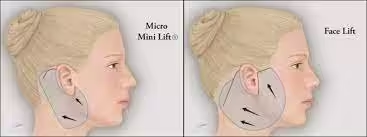
How Is a Mini Facelift Different from a Full Facelift?
A mini facelift is not simply a “smaller price” version of a full facelift. It treats a smaller area with less dissection, so it fits some faces very well and others poorly. The comparison below shows the main differences.
| Feature | Mini Facelift | Full (SMAS / Deep-Plane) Facelift |
|---|---|---|
| Main target | Early to moderate jowls, lower cheek, jawline | Cheeks, jawline, jowls, and neck together |
| Incision | Short, in front of the ear (may extend slightly) | Longer, around the ear and into the hairline |
| Neck correction | Limited | Stronger, especially with a neck lift |
| Operating time | Usually about 2–3 hours | Often 4 hours or more |
| Downtime | Often about 1–2 weeks socially | Often 2–3 weeks |
| Longevity | More subtle, generally shorter-lasting | Generally longer-lasting |
| Best for | Early signs of aging with good skin elasticity | Moderate to advanced sagging, significant neck laxity |
When sagging extends into the neck, a neck lift or a deep-plane facelift is usually the more suitable choice. A systematic review of the MACS lift noted that its effect on the neck is limited and that additional procedures are warranted when neck aging is the main concern.
Who Is a Good Candidate for a Mini Facelift?
A mini facelift tends to work best for people who notice the first signs of lower-face aging but are not yet ready for, or do not need, a full facelift. You may be a good candidate if:
- You have mild to moderate jowls or a softening jawline.
- Your cheeks have started to descend and the folds beside the nose and mouth are deepening.
- Your skin still has reasonable elasticity.
- Your neck is relatively firm, or you plan to treat it separately.
- You are in good general health and do not smoke, or you are willing to stop before surgery.
- You want a natural refresh and have realistic expectations.
Who May Need a Different Procedure?
- People with heavy neck laxity or platysmal bands: a neck lift or full facelift is more appropriate.
- People with significant skin excess or deep wrinkles: a mini facelift cannot remove large amounts of skin.
- People whose main concern is volume loss: fat grafting or filler may be needed instead of, or alongside, a lift.
- Smokers and people with uncontrolled medical conditions: healing and anesthesia risks are higher.
- People who cannot stop blood-thinning medication: the risk of bleeding and hematoma rises.
What Is the Best Age for a Mini Facelift?
There is no fixed age limit, because the decision depends on how much tissue has descended and how elastic your skin is, not on the number alone. In practice, most mini facelift patients are in their 40s to 60s. Younger patients with early jowling may benefit from non-surgical options first, while patients in their late 50s or 60s with good skin quality can still be excellent candidates. If sagging has progressed far enough that skin and neck laxity dominate, a full facelift is usually the better option regardless of age.
Non-surgical treatments such as botulinum toxin, fillers, radiofrequency, and laser can delay the need for surgery. When these no longer produce enough improvement, a surgical lift becomes the more reliable choice.
How Is a Mini Facelift Performed?
- Consultation and planning: The surgeon assesses your facial structure, skin quality, and goals, takes photographs, and reviews your medical history and medications.
- Anesthesia: The operation is performed under local anesthesia with sedation or under general anesthesia, depending on the extent of surgery and your preference.
- Incision: A short incision is made in front of the ear, often hidden in the natural crease, and may extend slightly into the temple hairline or around the earlobe.
- Lifting: The sagging tissue is released within a limited area and repositioned upward, commonly with internal purse-string or suspension sutures, without the wide dissection of a full facelift.
- Skin trimming and closure: The excess skin is removed, and the incision is closed with fine sutures. A light dressing is applied, and a small drain may be placed in some cases.
The operation usually takes about 2–3 hours. In one published comparison, MACS lifts averaged just over two and a half hours versus about four hours for conventional facelifts, and a 2026 meta-analysis found MACS had a significantly shorter surgical time than deep-plane SMAS lifts while showing comparable aesthetic outcomes and complication rates. Shorter surgery does not make the procedure trivial, though: it is still a real operation that needs an experienced surgeon and proper aftercare.
What Can and Cannot a Mini Facelift Fix?
| It can improve | It cannot fully correct |
|---|---|
| Mild to moderate jowls | Significant loose skin or heavy bands in the neck |
| A softened jawline and lower-face contour | Deep wrinkles, sun damage, and skin texture (needs resurfacing or laser) |
| Early cheek descent | Major volume loss (needs fat grafting or filler) |
| Moderate depth of the nasolabial folds and marionette lines | Upper-face concerns such as brow position and eyelid hooding |
Procedures Often Combined with a Mini Facelift
A mini facelift is frequently combined with other treatments so that the whole face ages and looks more evenly refreshed:
- Eyelid surgery (blepharoplasty): removes under-eye bags or excess upper eyelid skin.
- Fat grafting: restores volume to hollow cheeks or the tear trough area.
- Neck lift or platysmaplasty: improves the neck when the jawline lift alone is not enough.
- Brow lift: raises a low brow that a lower-face lift cannot reach.
- Laser or skin resurfacing: improves texture, fine lines, and pigmentation.
Combining procedures usually lengthens the operation and recovery slightly, so your surgeon will advise which combination makes sense in a single session.
How Long Does a Mini Facelift Last?
A mini facelift does not stop the aging process; it moves the clock back by lifting tissue to a younger position, after which natural aging continues. Visible benefit commonly lasts several years, and many patients report satisfaction for five years or more, but the exact duration varies with age, genetics, skin quality, weight changes, smoking, and sun exposure.
Published evidence is also limited. A systematic review of the MACS lift covering six studies and 739 patients reported high satisfaction and no major complications, but half of the studies were of low evidence level, so exact longevity claims should be treated with caution. As a general rule, mini facelift results are more subtle and may fade sooner than those of a full SMAS or deep-plane facelift. Healthy habits, stable weight, daily sunscreen, and not smoking all help the result last.
Mini Facelift Recovery: What to Expect
| Time | What to expect | Recommendation |
|---|---|---|
| First 24–48 hours | Dressing in place, swelling, tightness, mild discomfort, possible small drain | Rest with your head elevated; take medication as prescribed; attend the first dressing check |
| Days 3–7 | Peak swelling and bruising, numbness around the ears and cheeks | Keep your head elevated; avoid bending and lifting; no smoking or alcohol |
| Days 7–14 | Bruising fades, stitches are removed as advised, most people return to desk work | Gentle walking; makeup only with your surgeon’s approval |
| Weeks 3–6 | Mild residual swelling and tightness; skin sensation gradually returns | Resume light exercise gradually; protect scars from the sun |
| Months 2–3 | Swelling largely resolves and the contour settles | Follow-up examination |
| Months 6–12 | Scars mature and fade; numbness resolves in most patients | Continue sun protection and scar care |
These are averages. Recovery varies with the technique, any combined procedures, your age, and how closely you follow instructions. Contact your surgeon promptly if you notice:
- Rapidly increasing swelling, tightness, or pain on one side of the face
- Increasing redness, discharge, or fever around the incision
- Difficulty moving part of your face or marked asymmetry when smiling
- Blurred vision or severe, uncontrolled pain
Before Surgery
- Stop smoking and nicotine products for at least 2–4 weeks beforehand, and avoid alcohol.
- Tell your surgeon about all medications, vitamins, and herbal supplements; some blood-thinning products must be stopped under medical guidance.
- Follow fasting instructions, especially if you will have sedation or general anesthesia.
- Arrange for someone to accompany you home and help during the first 24 hours.
After Surgery
- Sleep with your head elevated for the first several days.
- Avoid heavy lifting, strenuous exercise, and activities that raise blood pressure for the period your surgeon specifies.
- Keep the incision areas clean and dry until you are told washing is safe.
- Do not rub or press on the face, and avoid sleeping on your side early on.
- Use sunscreen and scar care as advised, and attend every follow-up visit.
Will a Mini Facelift Leave Scars?
Every facelift leaves a scar, but the mini facelift is designed to keep it short and well hidden: along the natural crease in front of the ear, and in some cases a small extension into the temple hairline or around the earlobe. Most scars fade to a fine line over several months. Careful incision placement, good wound care, sun protection, and, where recommended, silicone sheets or gel all help. If a scar thickens or widens, early treatment by your surgeon works best.
Risks and Side Effects of a Mini Facelift
A mini facelift is generally considered a relatively low-risk facelift technique, but it is still surgery. Common short-term effects are swelling, bruising, tightness, and temporary numbness. Less common complications include:
| Risk | What it means | Typical course |
|---|---|---|
| Hematoma | A collection of blood under the skin; in one published series of 80 MACS lifts, 3 hematomas were reported | Usually drained promptly; risk is reduced by stopping blood thinners and controlling blood pressure |
| Temporary nerve weakness | Brief weakness of a facial nerve branch; 1 case in the same series | Usually resolves within weeks to months |
| Infection | Redness, warmth, discharge, or fever around the incision | Treated with antibiotics; rare when wound care is followed |
| Visible or widened scars | Thickened or stretched scars, more likely in smokers or with tension | Often improved with scar care or minor revision |
| Asymmetry or suspension failure | One side settles differently or the lift loosens early | Monitored; occasionally corrected surgically |
| Hair thinning near the incision | Temporary thinning along the temple or ear hairline | Usually regrows; may be covered by hair |
Choosing an experienced surgeon, being honest about your health history and medications, and following all pre- and post-operative instructions are the most effective ways to lower these risks.
Mini Facelift vs Non-Surgical Alternatives
Non-surgical treatments are appealing for people who are not ready for surgery, but they work differently and have clear limits:
| Method | What it does | Limitations |
|---|---|---|
| Hyaluronic acid filler | Restores volume in cheeks and folds | Adds volume but does not truly lift sagging tissue; needs repeating |
| Thread lift | Temporarily suspends mildly sagging tissue | Effect is modest and short-lived compared with surgery |
| Radiofrequency / ultrasound | Gently tightens skin through heat | Mild improvement only; works best for early laxity |
| Botulinum toxin | Relaxes muscles that cause lines and can subtly sharpen the jawline | Does not correct sagging |
| Mini facelift | Repositions tissue and removes excess skin | Requires surgery, downtime, and a short scar |
If sagging is already visible at rest, non-surgical methods rarely achieve the same change as surgery. Combining a lift with fat grafting or skin treatments is often the most effective plan.
How Much Does a Mini Facelift Cost in Turkey?
The cost of a mini facelift varies from clinic to clinic and from hospital to hospital. The hospital and surgeon you choose directly affect the price, as do how much tissue needs lifting and which additional procedures are combined with the lift. Published guides for Turkey differ by source, but most place a mini facelift somewhere in the range of roughly $3,500 to $7,500, with premium hospital pricing at the upper end or above.
| Country | Typical 2026 Price Range (guide) |
|---|---|
| Mini Facelift in Turkey | $3,500 – $7,500 |
| Mini Facelift in the UK | £4,000 – £8,000 |
| Mini Facelift in the USA | $8,000 – $15,000 |
These figures are general estimates, not a quote. Your final fee is set after a personal examination.
What Affects the Price?
- Technique and extent of the lift: a limited MACS-type lift costs less than a combined or extended procedure.
- Combined procedures: eyelid surgery, fat grafting, or a neck lift add to the total. Adding a neck lift typically raises the cost of the base procedure by around 20–30%.
- Surgeon experience and hospital standard: accredited hospitals and highly experienced surgeons generally charge more.
- Anesthesia and hospital stay: local anesthesia with sedation versus general anesthesia, and same-day discharge versus an overnight stay.
- Package contents: accommodation, airport transfers, medication, dressings, and follow-up visits may or may not be included.
Questions to Ask When Comparing Prices
- Who will actually perform the surgery, and how many mini facelifts have they performed?
- Which technique is used and exactly what is included in the price?
- Who administers the anesthesia, and in which facility is the surgery performed?
- What happens if a complication occurs, and how are follow-up and revision handled?
The lowest price is not always the best value. Safety, surgeon skill, and aftercare matter far more than a small difference in cost.
How to Choose a Surgeon for Your Mini Facelift
A mini facelift looks simple on paper, but its results depend heavily on planning and technique. Look for a surgeon with specialist training in facial plastic or aesthetic surgery, regular experience with facelift techniques, and a clear willingness to say when a mini facelift is not the right option for you. Reviewing real before-and-after photos of patients with similar facial structure and age gives you a realistic picture of what to expect.
When you look at before-and-after photos, check whether they were taken under the same lighting and angle, how long after surgery the photo was taken (swelling can mask or exaggerate results in the first weeks), and whether other procedures were performed at the same time.
Planning a Mini Facelift Trip to Turkey
Many international patients combine their mini facelift with a short stay in Istanbul. Most packages include around five to seven nights, which allows time for your surgery, the first dressing check, and an early review before you travel home. Ask your clinic in advance about flight timing after surgery, medication, wound-care supplies, and how follow-up will be handled once you are back home. Consider arranging a companion to travel with you, particularly if you are having sedation or general anesthesia.