Why Choose Turkey for Blepharoplasty?
Turkey’s reputation as a hub for aesthetic procedures is well-earned, attracting thousands of international patients annually. Several factors contribute to its appeal for blepharoplasty:- Cost-Effectiveness: Procedures in Turkey are often significantly more affordable than in Western countries, without compromising on quality or safety standards.
- High-Quality Medical Facilities: Many clinics and hospitals boast state-of-the-art technology, modern infrastructure, and adhere to international healthcare standards.
- Experienced Surgeons: Turkish plastic surgeons are highly trained, often with international experience and specializations in aesthetic and reconstructive surgery.
- Medical Tourism Infrastructure: The country offers a well-developed support system for international patients, including language assistance, accommodation, and transfer services.
Key Criteria for Selecting Your Blepharoplasty Surgeon
Choosing a blepharoplasty surgeon is a critical decision that impacts both your aesthetic outcome and your safety. Here are the essential criteria to consider:Board Certification and Qualifications
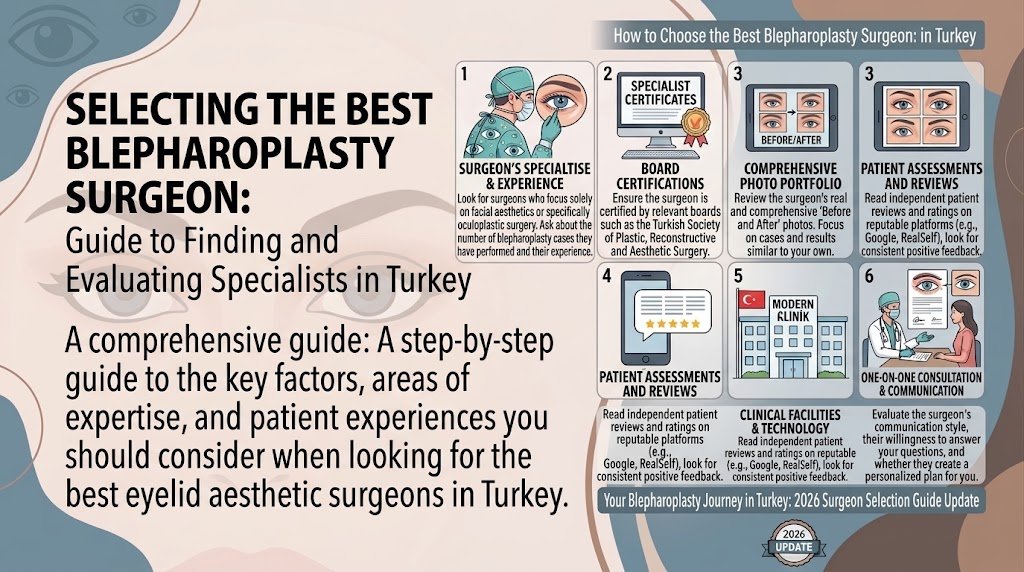
The foundation of a reliable surgeon lies in their credentials. Always prioritize a surgeon who is board-certified.- Importance of Board Certification: Board certification indicates that a surgeon has met rigorous standards of education, training, and ethical practice in their specialty. In Turkey, look for certification from the Turkish Plastic Reconstructive and Aesthetic Surgery Association (TPRECD) or equivalent international boards.
- Specialization in Plastic/Oculoplastic Surgery: While general plastic surgeons perform blepharoplasty, oculoplastic surgeons have an even more specialized focus on the eyelids and surrounding facial structures. Their in-depth understanding of ocular anatomy can be a significant advantage.
- Educational Background: Inquire about where the surgeon completed their medical degree, residency, and any fellowship training. Prestigious institutions and extensive training programs often signify a higher level of expertise.
Experience and Specialization
Experience is invaluable in surgical procedures, particularly in delicate areas like the eyelids.- Years of Experience in Blepharoplasty: A surgeon who has been performing blepharoplasty for many years will have encountered a wide range of cases and developed refined techniques.
- Focus on Eyelid Surgery: Some surgeons perform blepharoplasty as one of many procedures, while others have a dedicated focus on eyelid and facial aesthetics. A surgeon who specializes in blepharoplasty is likely to have a deeper understanding and greater proficiency.
- Number of Procedures Performed: Ask about the volume of blepharoplasty procedures the surgeon performs annually. A high volume often correlates with consistent practice and expertise.
Before & After Photos and Patient Testimonials
Visual evidence and patient experiences offer crucial insights into a surgeon’s skill and patient satisfaction.- Reviewing Portfolios: Request to see an extensive portfolio of before and after photos, specifically for blepharoplasty cases. Look for consistent, natural-looking results that align with your aesthetic goals. Pay attention to different angles, lighting, and patient demographics.
- Authenticity of Testimonials: Seek out genuine patient testimonials and reviews on independent platforms. Be wary of overly generic or excessively positive reviews that lack specific details.
- Video Testimonials: Video testimonials can provide a more authentic perspective on patient experiences, including their journey, recovery, and satisfaction with the results.
Clinic Accreditation and Facilities
The environment in which your surgery is performed is as important as the surgeon’s skill.- International Accreditations (JCI, ISO): Clinics with international accreditations like Joint Commission International (JCI) or ISO demonstrate a commitment to global standards in patient safety and quality of care.
- Modern Equipment and Safety Standards: Ensure the clinic utilizes up-to-date surgical equipment and adheres to strict sterilization protocols. Inquire about emergency preparedness and patient monitoring systems.
- Anesthesia Protocols: Understand the type of anesthesia used and the qualifications of the anesthesiologist. A board-certified anesthesiologist is crucial for patient safety.
Communication and Patient Care
Effective communication and compassionate care are vital for a positive surgical experience.- Initial Consultation Quality: The consultation should be thorough, allowing you to express your concerns and goals. The surgeon should listen attentively, provide realistic expectations, and clearly explain the procedure, potential risks, and recovery process.
- Surgeon-Patient Rapport: Choose a surgeon with whom you feel comfortable and confident. A good rapport fosters trust and open communication, which is essential for a successful outcome.
- Post-Operative Care and Follow-up: Inquire about the post-operative care plan, including follow-up appointments, wound care instructions, and who to contact in case of concerns. Comprehensive aftercare is crucial for optimal healing.
Cost Transparency and Inclusions
Understanding the financial aspect is key to avoiding unexpected expenses.- Detailed Breakdown of Costs: Request a comprehensive quote that itemizes all costs associated with the blepharoplasty. This should include surgeon’s fees, anesthesia fees, facility fees, and any pre- or post-operative consultations.
- What’s Included: Clarify what services are covered by the quoted price. This typically includes:
- Surgeon’s fee
- Anesthesia costs
- Operating room fees
- Hospital stay (if applicable)
- Initial post-operative check-ups
- Any necessary medications during your stay
- Avoiding Hidden Fees: Be vigilant about potential hidden costs. Ask about fees for revisions, additional consultations, or unexpected complications. A reputable clinic will be transparent about all potential expenses.
The Consultation Process: What to Expect and Ask
The consultation is your opportunity to assess the surgeon and the clinic. Prepare thoroughly to make the most of this crucial step.- Preparing for the Consultation:
- List your aesthetic goals and concerns.
- Gather any relevant medical history, including previous surgeries, medications, and allergies.
- Prepare a list of questions to ask the surgeon.
- Key Questions to Ask:
- “Are you board-certified in plastic or oculoplastic surgery?”
- “How many blepharoplasty procedures have you performed?”
- “What specific technique will you use for my case, and why?”
- “What are the potential risks and complications associated with this procedure?”
- “What is the expected recovery timeline, and what kind of support will I receive?”
- “Can I see more before and after photos of your blepharoplasty patients?”
- Assessing the Surgeon’s Communication Style: Pay attention to how the surgeon communicates. Do they explain things clearly? Do they answer your questions thoroughly and patiently? A good surgeon will ensure you feel informed and comfortable.
Common Pitfalls to Avoid When Choosing a Surgeon
While seeking value, be aware of potential traps that could compromise your safety and results.- Over-Reliance on Price Alone: The cheapest option is rarely the best when it comes to surgical procedures. Prioritize safety, expertise, and quality over cost savings.
- Ignoring Red Flags: Be cautious of clinics that pressure you into making a quick decision, offer unrealistic guarantees, or have a lack of transparency regarding costs or qualifications.
- Lack of Research: Failing to conduct thorough research on the surgeon’s credentials, experience, and patient reviews can lead to unsatisfactory outcomes.
- Unrealistic Expectations: A reputable surgeon will provide realistic expectations about the results of blepharoplasty. Be wary of anyone promising perfection or outcomes that seem too good to be true.
Why Face Aesthetics for Your Blepharoplasty in Turkey?
At Face Aesthetics, we understand the significance of choosing the right surgeon for your blepharoplasty. Our commitment to excellence is reflected in every aspect of our practice:- Expertise and Specialization: Our team comprises highly qualified, board-certified plastic surgeons with extensive experience in facial aesthetics, including a deep specialization in blepharoplasty. We employ modern approaches and advanced surgical techniques to ensure optimal and natural-looking results.
- Patient-Centric Approach: We prioritize your safety, comfort, and satisfaction. From your initial consultation to your post-operative recovery, our dedicated team provides personalized care and support, ensuring all your questions are answered and concerns addressed.
- Modern Facilities: Face Aesthetics operates in state-of-the-art facilities equipped with the latest technology and adhering to stringent international safety and hygiene standards.
- Comprehensive Support: We offer a seamless experience for our international patients, including assistance with travel arrangements, accommodation, and translation services, making your journey stress-free.
Frequently Asked Questions
Blepharoplasty is typically performed under local anesthesia with sedation, meaning you will be comfortable and feel no pain during the procedure. Post-operative discomfort is usually mild and can be managed with prescribed pain medication.
Initial recovery, including swelling and bruising, usually lasts 1-2 weeks. Most patients can return to light activities within a few days and resume normal activities within 2-3 weeks. Full healing and final results may take several months.
As with any surgical procedure, blepharoplasty carries some risks, including infection, bleeding, dry eyes, temporary blurred vision, difficulty closing the eyes (rarely permanent), and asymmetry. Your surgeon will discuss these risks in detail during your consultation.
The results of blepharoplasty are generally long-lasting. For many patients, the improvements can last for 10-15 years or even a lifetime, significantly rejuvenating the eye area. The natural aging process will continue, but the surgical improvements are permanent.