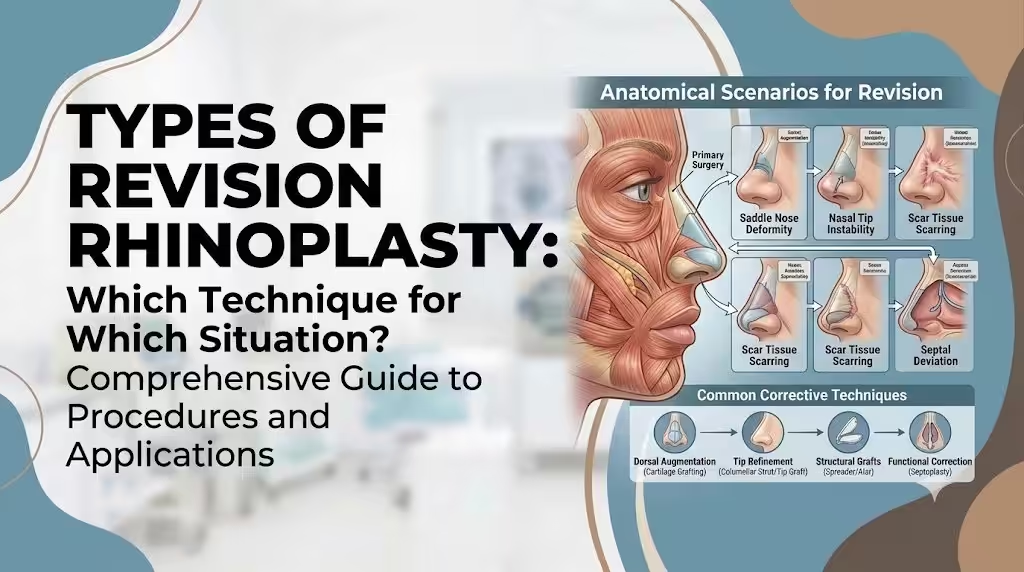
Revision rhinoplasty is a specialized surgical procedure designed to correct unsatisfactory outcomes or complications from a previous nose surgery.
For individuals navigating the complexities of an unsatisfactory primary rhinoplasty, the journey towards a refined outcome often feels daunting. Revision rhinoplasty, unlike a primary procedure, demands an unparalleled level of surgical artistry and a deep understanding of compromised nasal anatomy. In 2026, advancements in diagnostic tools and surgical techniques offer more precise solutions than ever before, moving beyond generic fixes to truly address unique patient needs.
Understanding Revision Rhinoplasty: More Than Just a Second Chance
Revision rhinoplasty is a highly intricate surgical procedure performed to correct functional or aesthetic issues that persist or have developed after a previous rhinoplasty.
This specialized surgery is typically sought by patients who are dissatisfied with the results of their initial nose surgery or who have experienced complications. The reasons for needing a revision can be varied and often deeply impact a patient’s self-esteem and quality of life. Common reasons for dissatisfaction or complications from primary surgery include:
- Persistent aesthetic concerns such as asymmetry, an unnatural shape, or a disproportionate size.
- Functional issues like nasal obstruction or difficulty breathing, which may have worsened or appeared after the first surgery.
- Visible scarring or irregularities that detract from the overall appearance.
- Unrealistic expectations that were not met by the initial procedure.
The psychological impact of a failed primary rhinoplasty can be profound, leading to frustration, anxiety, and a diminished sense of confidence. Patients often feel hesitant to undergo another surgery, making the choice of an expert revision rhinoplasty surgeon even more critical.
Revision rhinoplasty is significantly more complex than a primary procedure. The surgeon must navigate through scar tissue, altered anatomy, and often a reduced supply of healthy cartilage. This requires a unique skill set, extensive experience, and a reconstructive mindset, differentiating it from a simple ‘redo.’ Finding a specialist who understands the intricacies of working with compromised tissue and scar tissue is paramount for achieving a successful and satisfying result in 2026.
Key Factors Influencing Revision Rhinoplasty Technique Selection
Selecting the appropriate revision rhinoplasty technique is a highly individualized process, contingent on a multitude of factors. The ‘canvas’ for revision surgery is often significantly altered compared to a primary case, requiring a more advanced and reconstructive approach rather than just aesthetic sculpting. Surgeons must also consider the concept of ‘scar tissue memory,’ where the nose tends to revert to its previous state or form new scar tissue, influencing long-term results.
Key factors that meticulously guide the surgeon’s choice of technique include:
- Patient’s Original Surgical Outcome: A detailed analysis of what went wrong in the primary surgery is crucial. This includes evaluating the extent of tissue removal, remaining structural support, and existing deformities.
- Remaining Nasal Structure: The integrity and quantity of the patient’s existing bone and cartilage framework are vital. Often, previous surgery has weakened or removed critical support structures.
- Skin Quality and Thickness: The condition of the nasal skin and soft tissue envelope plays a significant role in how well the underlying structural changes will be visible and how the nose will heal.
- Cartilage Availability: The presence of viable septal cartilage from the primary surgery is ideal. If insufficient, alternative sources like ear (conchal) or rib (costal) cartilage must be considered for grafting.
- Patient Expectations: A clear understanding of the patient’s aesthetic goals and functional needs is essential, coupled with a realistic assessment of what can be achieved given the altered anatomy.
- Surgeon’s Expertise and Philosophy: The individual surgeon’s experience with various revision techniques, their preferred methodologies, and their artistic vision heavily influence the chosen approach.
- Specific Functional or Aesthetic Issues: The exact problems to be corrected, such as breathing difficulties, asymmetry, or a pinched tip, will dictate the necessary surgical maneuvers.
Common issues that often require specific considerations in technique selection include:
- Pollybeak Deformity: An excess of soft tissue or cartilage above the nasal tip, creating a “parrot’s beak” appearance.
- Inverted V Deformity: A visible inverted V-shape on the middle third of the nose, often due to collapse of the upper lateral cartilages.
- Pinched Tip: An overly narrowed and unnatural-looking nasal tip, typically from aggressive cartilage removal.
- Breathing Issues: Nasal obstruction caused by internal valve collapse, septal deviation, or scar tissue.
Common Issues Addressed by Revision Rhinoplasty
Revision rhinoplasty addresses a wide spectrum of issues that can arise after an initial nose surgery, ranging from subtle aesthetic imperfections to significant functional impairments. Often, functional and aesthetic concerns are intertwined in revision cases, necessitating a holistic approach to diagnosis and treatment. Identifying the root cause of breathing problems after primary surgery can be particularly challenging, requiring advanced diagnostic techniques.
Aesthetic Concerns:
- Over-resection: This occurs when too much cartilage or bone is removed, leading to a “scooped” bridge, an overly short nose, or a pinched tip.
- Under-resection: Insufficient removal of tissue can leave a residual hump, a wide tip, or an overall lack of refinement.
- Asymmetry: Unevenness in the nasal bridge, nostrils, or tip, which can be subtle or quite pronounced.
- Pollybeak Deformity: An excess of tissue or cartilage above the nasal tip, creating a rounded, beak-like appearance.
- Inverted V Deformity: A visible inverted V-shape on the middle part of the nose, often caused by the collapse of the upper lateral cartilages.
- Open Roof Deformity: A visible depression or sharp edges along the nasal bridge, typically after hump removal without proper osteotomy closure.
Functional Concerns:
- Nasal Obstruction: Difficulty breathing through one or both nostrils, often due to internal valve collapse, septal deviation, or excessive scar tissue formation.
- Breathing Difficulties: A general sensation of inadequate airflow, which can significantly impact quality of life, sleep, and exercise.
Patient Dissatisfaction:
- Unnatural Appearance: The nose may look “operated on,” failing to blend harmoniously with other facial features.
- Persistent Swelling: Prolonged or uneven swelling that does not resolve as expected, often due to scar tissue.
- Unnatural Scar Visibility: While external incisions are typically well-hidden, poor healing or specific techniques can lead to visible or hypertrophic scars.
Primary Techniques in Revision Rhinoplasty: A Detailed Overview
The choice of surgical technique in revision rhinoplasty is paramount, dictated by the specific issues requiring correction and the surgeon’s expertise. The two main surgical approaches are open and closed revision rhinoplasty, complemented by non-surgical options and the critical role of cartilage grafting.
1. Open Revision Rhinoplasty
Open revision rhinoplasty involves a small incision across the columella (the strip of skin between the nostrils), which allows the surgeon to lift the skin and soft tissues, providing a direct and unobstructed view of the underlying nasal structures. This approach is often compared to ‘rebuilding a house from its foundation’ due to its comprehensive nature.
- Incision Placement: A small, inverted V or W-shaped incision is made across the columella.
Advantages:
- Direct Visualization: Offers the surgeon a clear and complete view of the nasal anatomy, which is crucial for complex cases with altered structures and scar tissue.
- Precision: Allows for highly precise placement of grafts, reshaping of cartilage, and correction of significant asymmetries or deformities.
- Structural Reconstruction: Ideal for cases requiring extensive grafting and rebuilding of structural support.
Disadvantages:
- Longer Recovery: Typically involves more initial swelling and a longer overall recovery period compared to the closed approach.
- Potential for Columellar Scar: While usually well-hidden and fading over time, there is a potential for a visible scar across the columella.
- Ideal Situations: Complex cases involving significant structural reconstruction, severe asymmetry, extensive scar tissue, significant tip deformities, or functional issues requiring precise anatomical adjustments. Advanced imaging, such as 3D CT scans, plays a crucial role in planning these intricate procedures.
2. Closed Revision Rhinoplasty
Closed revision rhinoplasty involves all incisions being made internally, within the nostrils, leaving no external scars. This technique requires exceptional skill and anatomical knowledge due to the ‘blind’ nature of the surgery, often preferred by surgeons specializing in subtle refinements.
- Incision Placement: All incisions are made inside the nostrils, making them completely invisible externally.
Advantages:
- No External Scar: Leaves no visible scars on the outside of the nose.
- Potentially Faster Initial Recovery: May result in less initial swelling and a quicker return to normal activities for some patients.
- Less Swelling: Often associated with less prolonged swelling compared to open techniques.
Disadvantages:
- Limited Visualization: The surgeon operates through smaller openings, offering a more restricted view of the underlying structures.
- Less Precision for Complex Changes: May be less suitable for cases requiring extensive structural changes, significant grafting, or severe asymmetry.
- Ideal Situations: Minor refinements, subtle adjustments to the nasal bridge or tip, minimal structural changes, or for patients with good underlying nasal structure from their primary surgery who only require fine-tuning.
3. Non-Surgical Revision Rhinoplasty (Fillers)
Non-surgical revision rhinoplasty utilizes injectable dermal fillers to address minor contour irregularities, camouflaging small defects, or providing subtle augmentation. It is a temporary or minor corrective option, not a substitute for surgical revision, especially for functional issues.
- Use of Dermal Fillers: Primarily involves hyaluronic acid (HA) fillers like Restylane or Juvéderm, which can be reversed if necessary.
Advantages:
- Non-Invasive: No surgery or incisions are required.
- Immediate Results: Changes are visible immediately after the procedure.
- Reversible: HA fillers can be dissolved with an enzyme if the patient is dissatisfied or complications arise.
- Lower Cost: Generally less expensive than surgical revision.
Disadvantages:
- Temporary: Results typically last 6-18 months, requiring repeat treatments.
- Limited Scope: Can only address minor aesthetic concerns and cannot correct structural or functional problems.
- Risks: Although rare, risks include bruising, swelling, infection, and more serious complications like vascular occlusion leading to skin necrosis or blindness.
- Ideal Situations: Camouflaging small residual humps, filling minor depressions, correcting subtle asymmetries, or providing minor bridge augmentation. The altered anatomy from previous surgery makes it crucial to choose an experienced injector.
4. Cartilage Grafting Techniques in Revision Rhinoplasty
Cartilage grafting is almost universally required in revision rhinoplasty due to the common problem of previous tissue removal during the primary surgery. Grafts are essential for restoring structural support, refining contours, and camouflaging defects.
Sources:
- Septal Cartilage: The ideal source if still available from the primary surgery, as it is straight and strong.
- Ear Cartilage (Conchal): Provides flexible, curved cartilage, useful for tip refinement and alar rim support, but limited in quantity.
- Rib Cartilage (Costal): Offers a robust and abundant source of cartilage, suitable for extensive structural reconstruction and dorsal augmentation. However, it carries a slight risk of warping.
Purpose:
- Structural Support: Rebuilding collapsed areas, strengthening the nasal tip, or supporting the nasal valves.
- Contouring: Adding volume or shape to areas that are deficient.
- Camouflaging Defects: Smoothing out irregularities or depressions.
- Tip Refinement: Shaping and projecting the nasal tip.
- Dorsal Augmentation: Increasing the height of the nasal bridge.
Specific Grafts:
- Spreader Grafts: Placed between the upper lateral cartilages and the septum to widen the middle vault, improve breathing, and prevent inverted V deformities.
- Columellar Struts: Used to strengthen and support the nasal tip, improving projection and definition.
- Shield Grafts: Placed at the nasal tip to add definition and projection.
- Alar Rim Grafts: Reinforce the nostril rims to prevent collapse and improve shape.
- Dorsal Onlay Grafts: Placed on the nasal bridge to augment its height or smooth out irregularities.
Choosing the Right Technique: A Personalized Approach (2026 Perspective)
The decision-making process for revision rhinoplasty is highly personalized, recognizing that the ‘best’ technique is not universal but rather tailored to the individual’s unique anatomy, concerns, and desired outcomes. In 2026, with advanced diagnostic tools and evolving surgical methodologies, patient-surgeon communication is more critical than ever for managing expectations and achieving optimal results.
Steps in the decision process for selecting the right technique:
- Thorough Consultation: A detailed discussion with a board-certified surgeon specializing in revision rhinoplasty is the first and most crucial step. This includes understanding your aesthetic goals and functional concerns.
- Detailed Medical History and Previous Surgical Records: Providing all available information from your primary surgery, including operative reports and before/after photos, helps the surgeon understand the previous alterations and potential challenges.
- Comprehensive Nasal Analysis: The surgeon will perform a meticulous examination of your internal and external nasal structures, assessing skin quality, cartilage availability, and the extent of scar tissue.
- 3D Imaging and Simulation: Modern clinics in 2026 often utilize advanced 3D imaging and simulation software. This technology allows both the surgeon and patient to visualize potential outcomes and collaboratively plan the surgical approach, ensuring alignment of expectations.
- Psychological Evaluation: Given the emotional toll a failed primary rhinoplasty can take, a candid discussion about psychological readiness and realistic outcomes is vital.
- Understanding Realistic Outcomes: It is crucial to have a clear understanding of what can realistically be achieved, as revision surgery often involves working with compromised tissues and may have limitations.
- Surgeon’s Experience and Expertise: The surgeon’s proven track record and extensive experience in complex revision cases are paramount. They will recommend the technique (open, closed, or a combination) that best addresses your specific issues.
The chosen technique will depend heavily on the specific problem to be corrected and the surgeon’s preferred methodology. A collaborative approach, where the patient’s input is valued and informed by expert medical advice, leads to the most satisfactory results.
Revision Rhinoplasty Techniques: A Comparative Analysis (2026)
The landscape of revision rhinoplasty continues to evolve in 2026, with innovations like ultrasonic rhinoplasty (piezo technology) offering more precise bone reshaping and advanced tissue engineering exploring new avenues for graft materials. These advancements can integrate into both open and closed approaches, enhancing precision and potentially improving recovery. The table below provides a comparative overview of the primary techniques.
Revision Rhinoplasty Techniques: Comparative Analysis (Table Plan)
| Feature | Open Revision Rhinoplasty | Closed Revision Rhinoplasty | Non-Surgical Revision (Fillers) |
|---|---|---|---|
| Complexity of Cases | Suitable for highly complex cases, significant structural reconstruction, severe asymmetry. | Best for minor refinements, subtle adjustments, minimal structural changes. | Only for minor contour irregularities, camouflaging small defects. |
| Visibility of Surgical Field | Direct and unobstructed view of all nasal structures. | Limited visualization, surgeon works through internal incisions. | No surgical field, external injection only. |
| External Scarring | Small, well-hidden incision across the columella, typically fades over time. | No external incisions, all scars are internal. | No scarring, only temporary injection marks. |
| Recovery Time | Longer initial swelling, overall recovery can be extended (up to 12-18 months for final results). | Potentially faster initial recovery and less swelling, but final results still take time. | Minimal to no downtime, immediate return to daily activities. |
| Cartilage Grafting | Extensively used for structural support and contouring; allows for precise graft placement. | Can be performed, but more challenging for extensive grafting due to limited visualization. | Not applicable; no cartilage is used. |
| Suitability for Functional Issues | Highly effective for correcting severe breathing problems and internal valve collapse. | Can address some functional issues, especially septal deviations, but less ideal for complex structural collapse. | Cannot correct functional breathing issues. |
| Permanence of Results | Permanent surgical correction. | Permanent surgical correction. | Temporary (6-18 months), requires repeat treatments. |
| Cost (Relative) | Highest due to complexity, surgical time, and anesthesia. | Moderate to high, depending on complexity. | Lowest per session, but recurring costs for maintenance. |
Conclusion and Strategic Decision
Revision rhinoplasty is undeniably one of the most challenging and individualized procedures in plastic surgery. It requires not only exceptional surgical skill but also a profound understanding of nasal anatomy, the healing process, and patient psychology. The journey to a successful revision is an investment in both physical appearance and psychological well-being, demanding a thoughtful, informed decision process.
Whether addressing aesthetic imperfections or functional breathing difficulties, the choice between open, closed, or even non-surgical techniques hinges entirely on the specific issues at hand and the remaining nasal architecture. Cartilage grafting, often sourced from the septum, ear, or rib, plays a pivotal role in rebuilding and refining the nose, making it an almost universal component of revision cases.
The long-term benefits of a successful revision extend far beyond cosmetic improvement, often restoring confidence, improving breathing, and enhancing overall quality of life. Therefore, the paramount importance of choosing an experienced, board-certified surgeon who specializes in revision rhinoplasty cannot be overstated. Their expertise, combined with advanced 2026 diagnostic tools and a personalized approach, is the cornerstone of achieving the refined and harmonious outcome you envision.
Ready to discuss your revision rhinoplasty options and achieve the nose you’ve always envisioned? Contact us today for a confidential, expert consultation.
Frequently Asked Questions
Revision rhinoplasty is more complex because the surgeon must work with altered nasal anatomy, scar tissue, and potentially reduced amounts of cartilage. Previous tissue removal or structural changes can limit the available options and may require a reconstructive approach.
The appropriate technique depends on the patient’s previous surgical outcome, remaining nasal structure, skin quality and thickness, cartilage availability, functional and aesthetic concerns, and desired results. The surgeon’s experience with complex revision cases also plays an important role.
Open revision rhinoplasty involves an incision across the columella, allowing the surgeon direct access to the nasal structures. Closed revision rhinoplasty uses internal incisions inside the nostrils and does not leave an external incision. Open surgery is generally more suitable for complex structural corrections, while closed surgery may be considered for selected cases requiring more limited refinements.
Cartilage grafting is commonly used in revision rhinoplasty to restore structural support, refine contours, correct irregularities, and improve nasal function. Depending on what remains after the previous surgery, cartilage may be obtained from the septum, ear, or rib.
Potential cartilage sources include the nasal septum, ear, and rib. Septal cartilage may be used when sufficient cartilage remains from the previous surgery. Ear cartilage can be useful for certain tip and alar corrections, while rib cartilage provides a larger amount of material for more extensive structural reconstruction.
Yes. Revision rhinoplasty can address certain functional problems such as nasal obstruction, septal deviation, internal nasal valve collapse, and structural problems affecting airflow. The appropriate treatment depends on the underlying cause of the breathing difficulty.
A pinched tip can be addressed through revision rhinoplasty when it is caused by structural changes or excessive cartilage removal. Depending on the anatomy, cartilage grafting and structural reconstruction may be used to improve tip shape and support.
Non-surgical revision rhinoplasty using dermal fillers may be appropriate for selected minor contour irregularities or small depressions. Fillers cannot replace surgical revision when structural or functional problems need to be corrected, and their results are temporary.
According to the source content, dermal filler results typically last approximately 6–18 months. Repeat treatments may therefore be necessary to maintain the result.
Recovery varies depending on the technique and complexity of the procedure. Open revision rhinoplasty may involve more initial swelling and a longer recovery period. The source content notes that final results can take up to 12–18 months to fully develop in some cases.
Experience with complex revision cases is particularly important. A thorough consultation should include evaluation of the previous surgery, remaining nasal structures, scar tissue, cartilage availability, functional concerns, and realistic expectations. The surgeon’s experience and approach to revision rhinoplasty should be carefully considered.