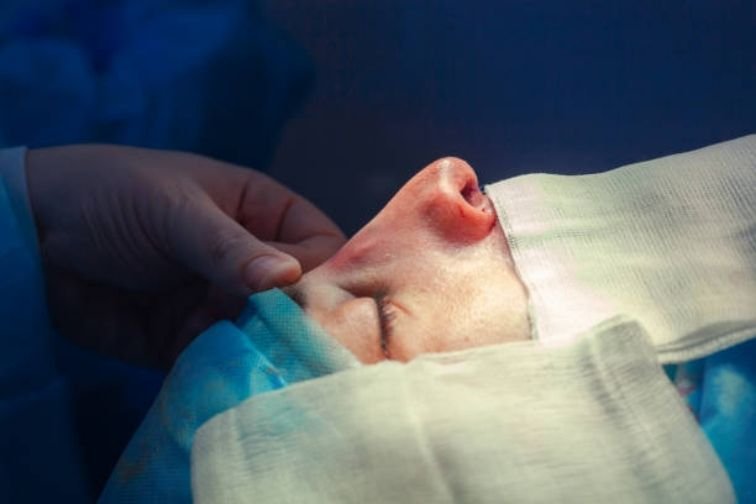
Beauty is a concept that changes and evolves over time; however, certain aesthetic features have stood out throughout history and represent a classical understanding of beauty. The Roman nose is an important part of this aesthetic understanding. This distinctive nose type, frequently seen in ancient Roman and Greek artworks, is now shaped using modern aesthetic surgical techniques known as Hawk Rhinoplasty. In this article, we will explore how Hawk Rhinoplasty, inspired by the classical beauty ideals of the past, has created a transformation in modern aesthetic surgery.
What is Roman Nose?
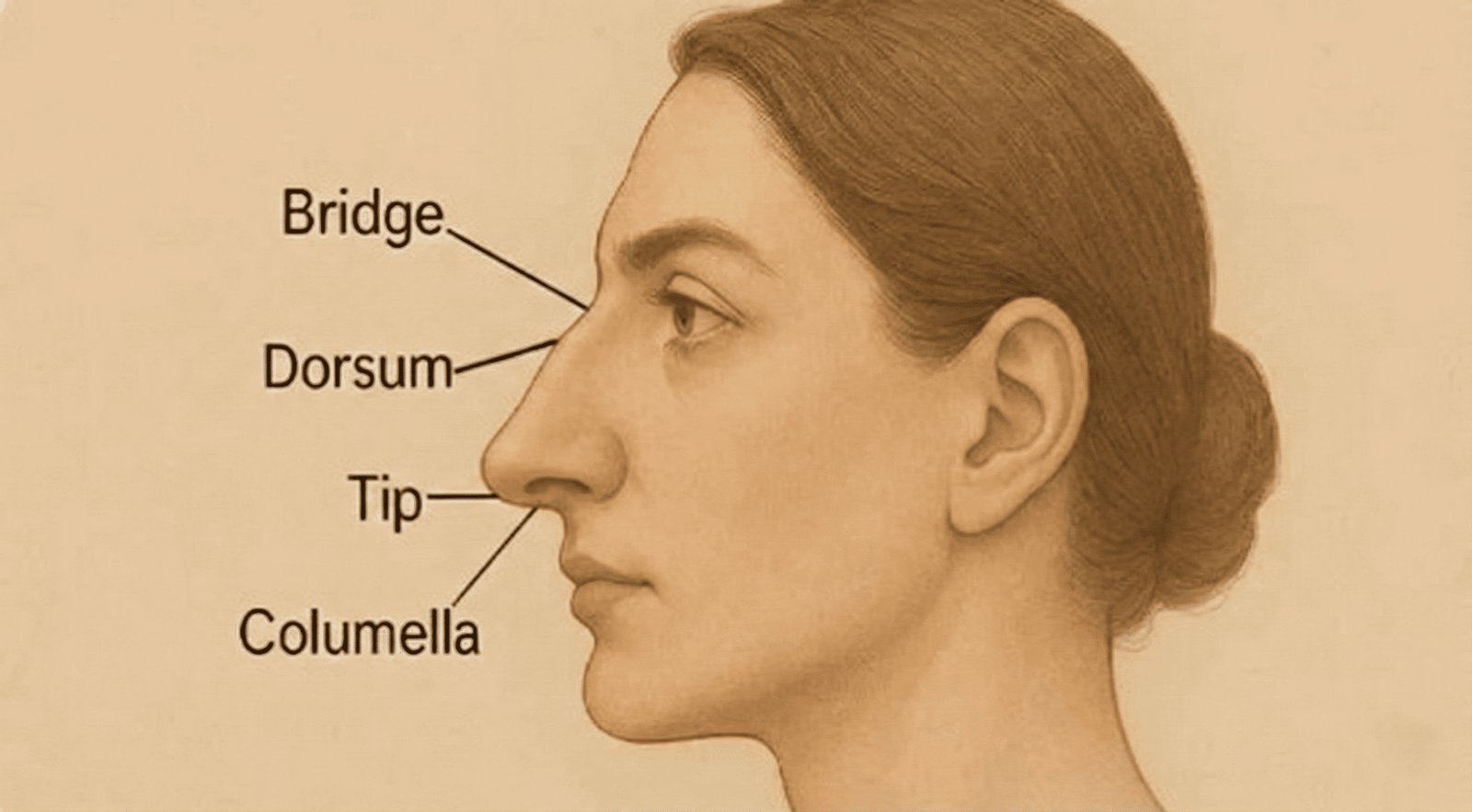
Hawk Rhinoplasty is an aesthetic surgical procedure performed to reshape the Roman nose type using modern surgical techniques. This procedure can be performed for purposes such as correcting the bridge of the nose, refining the tip of the nose, or reducing a prominent bump in the profile.
Who Is a Suitable Candidate for Roman Rhinoplasty?
Roman Rhinoplasty is a specialized approach that aims to refine the characteristic shape of the nose and make it more harmonious with the face, rather than completely eliminating its natural arched structure. The most suitable candidates for this procedure are:
- Individuals
- Those who wish to preserve their characteristic profile
- Those experiencing a drooping nasal tip
- Individuals with strong facial features
- Those with functional breathing difficulties
- Individuals with realistic expectations
Is Roman Hawk Rhinoplasty Different for Men and Women?
Roman (Eagle) Rhinoplasty is planned with different approaches due to the distinct aesthetic dynamics of male and female facial structures. While the primary goal is to refine the characteristic “hawk” (eagle) appearance in both genders, the balance of masculine or feminine results differs as follows:
- Naso-frontal Angle (Forehead-Nose Transition):
- In men: The point where the forehead meets the nose is left more pronounced and deeper. This gives the face a more severe and characteristic expression.
- In women: The goal is for this transition to be softer and smoother, making the profile line appear more elegant.
- Nasal Bridge Management:
- For men: The nasal bridge is generally not completely “smoothed out.” Leaving a very slight bridge or making the bridge completely straight preserves masculine authority. An overly curved nose can appear artificial on a male face.
- For women: The bridge of the nose is usually completely flattened. While some women leave a millimeter-sized curve (Roman nose) for a distinctive look, the general trend is to create a thinner, straighter line.
- Nasolabial Angle (Lip-Nose Angle):
- In men: The angle between the tip of the nose and the upper lip is generally kept around 90° – 95°. A more upturned nose tip does not look natural on a male face.
- In women: The tip of the nose can be lifted slightly higher (95° – 105°). This eliminates the “droopiness” of the natural slope of the Roman nose, providing a fresher and more feminine appearance.
- Nose Tip Width and Sharpness:
- For men: The nose tip is left wider and more angular to harmonize with a strong jawline.
- For women: The nose tip is narrowed and refined more; the goal is to create an elegant finish that highlights the eyes.
- Structural Integrity:
- For men: It is important that the bone and cartilage structure feels “strong.” After surgery, the nose should continue to be a “prominent feature” on the face.
- For women: It is preferable for the nose to blend in more with the other features of the face (cheekbones, lips) and create a smaller silhouette.
How Does Roman Nose Affect Facial Health and Psychology?
The effect of the Roman nose on facial health and psychology is closely linked to both structural functionality and the way a person perceives themselves. Physiologically, the high nasal bridge (dorsal hump) associated with a Roman nose can sometimes cause the cartilage partition (septum) inside the nose to bend or the nasal valve to narrow, triggering health problems such as chronic breathing difficulties, snoring, and sinusitis.
On the other hand, psychologically, the situation is more complex; while this nose structure reinforces self-confidence in some individuals as a symbol of an “authoritative and powerful” character, it can lead to “body dysmorphic disorder” or social phobia in people who are anxious about not conforming to society’s imposed beauty standards of a “small and curved nose.” Peer bullying during adolescence, particularly with the term “eagle nose,” can cause individuals to try to hide their profile and restrict themselves in social settings.
However, with the shift in aesthetic perception towards the “natural and characteristic” in recent years, many people view the Roman nose not as a flaw, but as a noble genetic signature and cultural heritage that distinguishes them from others, displaying a psychological profile at peace with this physical feature.
What Causes a Roman Nose?
Genetic Factors: A Roman nose tip may be the result of genetic inheritance. The presence of similar nose types in the family may cause an individual to have this nose shape.
Ethnic Characteristics: The Roman nose type may be more common in certain ethnic groups. This may be an ethnic characteristic resulting from genetic makeup.
Aging Process: The aging process can cause changes in nose shape. Tissue loosening and fat loss can affect the bridge and contours of the nose.
How to Fix a Roman Nose
- Cosmetic Surgery (Rhinoplasty):
The most effective and permanent way to correct a Roman nose is rhinoplasty, or cosmetic nose surgery. A specialist plastic surgeon can make various corrections to the bridge of the nose, the tip of the nose, and the profile. This method allows the individual to achieve a nose shape that is more suitable for their facial features. However, the surgical risks and recovery process associated with this option should be considered.
- Dermal Fillers:
Another way to correct the shape of the nose without surgical intervention is through dermal filler applications. Hyaluronic acid-based fillers can be used, especially for nose tip corrections. However, this method offers a temporary solution and may need to be repeated at certain intervals.
How is Roman Hawk Rhinoplasty Performed?
The Roma (Hawk/Eagle) rhinoplasty procedure typically begins with the careful reshaping of the bony and cartilaginous tissue on the bridge of the nose (dorsum); the goal here is to transform the “V”-shaped, rigid ridge into a softer convexity. For this reason, the surgeon uses Piezo (ultrasonic) surgical technology to mill the bone structure millimeter by millimeter without damaging the surrounding tissue, while re-designing the angle between the root (radix) and tip of the nose according to the patient’s chin and forehead projection. Furthermore, the slightly low nasal tip, which is a distinctive feature of the Roman nose, is stabilized by simply eliminating sagging and reinforcing it with structural support (strut graft), without transforming it into a “nut nose” shape. Thus, thanks to this technique, the noble and authoritative identity of the nose is preserved, while achieving a more modern and clean profile silhouette that does not clash with the facial features.
How Should a Pre-Operative Roman Rhinoplasty Analysis Be Performed?
The preoperative analysis process for Roman rhinoplasty should be conducted using a multifaceted and mathematical approach to ensure harmony with the entire face while preserving the character of the existing bridge structure. In this context, high-resolution photographs taken from the patient’s side profile are first used to measure the nasofacial, nasofrontal, and nasolabial angles down to the millimeter, determining how the bridge affects the vertical proportions of the face (the upper, middle, and lower thirds of the face). This analysis examines not only the nose but also whether the tip of the chin (pogonion) is set back, as a weak chin structure can make the bridge of the Roman nose appear more prominent and aggressive than it actually is. The surgeon then uses 3D simulation devices to digitally design, together with the patient, how much of the convex structure on the bridge of the nose will be preserved and the transition of the root depth of the nose to the forehead. From a functional perspective, cartilage deviations inside the nose and the structural pressure created by the bridge are examined tomographically to ensure that the aesthetic correction is planned in a way that does not compromise breathing comfort but rather supports it.
What Should Be Considered for a Natural-looking Roman Nose?
The most critical point for a natural-looking Roman nose is to preserve the structural balance with the other features of the face without destroying the nose’s unique character. For this reason, completely filing down the arched structure, which is the distinguishing feature of the Roman nose, to make it completely straight can cause the face to lose its historical and characteristic depth, resulting in an artificial appearance. Furthermore, the depth of the root (radix) of the nose must be carefully adjusted in relation to the forehead; the tip of the nose should be shaped in such a way that it is not lifted excessively and does not compromise the natural, slightly downward-sloping nobility of the Roman nose. Ultimately, creating a silhouette that is “unobtrusive” yet more refined and balanced, harmonizing with the projection of the chin and the cheekbone line, constitutes the fundamental success of natural Roman nose aesthetics.
Roman Hawk Nose Advantages
The Roman (Eagle/Hawk) nose is the most iconic representative of a distinctive and powerful profile in the world of aesthetics. Historically seen as a symbol of leadership and charisma, the fundamental advantages offered by this nose type are as follows:
- A Strong and Authoritative Image: The pronounced bridge and slightly downward-sloping tip of the nose give the person a dominant, confident, and authoritative stance. This feature has been considered the “signature of leadership” for emperors and commanders throughout history.
- Adding Depth and Dimension to the Face: The Roman nose creates a strong projection in the profile of the face. This makes faces with flat or subtle features appear more three-dimensional and dynamic.
- Supporting Masculine Features: Especially in men, when combined with the jawline and cheekbones, it emphasizes masculine and angular facial features, offering a more distinctive handsomeness.
- Personal Identity and Uniqueness: Unlike the “one-size-fits-all” noses created by modern aesthetic surgery, the Roman nose provides a personalized, natural, and memorable facial character. It adds a “signature” to the person’s face.
- Eye-Focused Gaze: The depth and arched structure at the root of the nose draws attention directly to the eye area. This helps the gaze appear more meaningful, deep, and focused.
- A Symbol of High Self-Confidence: When passed down as a genetic trait, this structure, which challenges conventional beauty standards, reinforces the perception that the person is at peace with their natural features and exudes self-confidence.
- Photographic Character: In photographs taken from the side profile, it creates a much clearer, more dramatic, and artistic silhouette compared to soft-lined noses.
After Hook Nose Treatment
- Rapid Recovery Process: A rapid recovery process may occur after surgical procedures such as rhinoplasty. However, full recovery may take several weeks.
- Noticeable Aesthetic Transformation: Individuals often experience a noticeable aesthetic transformation after hooked nose treatment. Their noses may become straighter, with more balanced and harmonious facial features.
What is Recovery Time After Hawk Rhinoplasty?
Next Term (First Week):
Swelling and Bruising: Swelling and bruising immediately after surgery are common, especially around the nose and eyes.
Nasal Packs and Splints: In some cases, packs or splints may be placed inside the nose to support the new nasal structure.
The First Two Weeks:
First Checkup: Initial checkups are performed after surgery, and the healing process of the nose is evaluated.
Swelling and Bruising Subside: Swelling and bruising usually subside within the first two weeks, but it may take several weeks for them to disappear completely.
The First Month:
Nasal Splints and Swelling Are Removed: Nasal splints and swelling are usually removed within the first month.
Light Exercise: Light exercise can be started, but strenuous exercise and weight lifting are usually postponed until a later date.
The First Few Months:
Full Recovery: Full recovery from rhinoplasty surgery can take several months.
Follow-up Appointments: Post-operative follow-up appointments continue, and the patient follows the surgeon’s instructions.