Nasal health is much more important than we realize in terms of quality of life. However, nasal valve collapse can occur due to either hereditary or acquired conditions. This condition can present as a problem that makes breathing difficult and negatively impacts daily life. This problem can occur especially in people who have previously undergone rhinoplasty, as a result of loss of internal nasal support or cartilage weakness. Fortunately, revision rhinoplasty can both strengthen the nasal valve and provide a natural and balanced appearance from an aesthetic point of view. If you would like more detailed information on this subject, please take a look at our content. We wish you all good health and happy days.
The Role and Importance of Revision Rhinoplasty in Nasal Valve Collapse
Revision rhinoplasty plays a critical role in restoring nasal function and achieving aesthetic integrity in cases of nasal valve collapse. This is because revision rhinoplasty permanently corrects the nose by reconstructing the nasal valve area in cases where too much cartilage was removed during the initial rhinoplasty or where the lateral wall support was weakened. In addition, deficient cartilage is supported with grafts taken from sources such as the septum, ear, or rib, and the nasal sidewall is strengthened using special techniques such as spreader, batten, or butterfly grafts. This ensures the valve angle achieves the correct anatomical width and prevents the nasal walls from collapsing inward during breathing. Thus, both breathing function is significantly improved and aesthetic deformities associated with collapse are eliminated. Consequently, the importance of revision rhinoplasty lies not only in correcting appearance but also in improving the patient’s quality of life by reopening the airway, which is the focus of functional rhinoplasty. Therefore, revision rhinoplasty is an indispensable treatment approach for patients with nasal valve collapse, both functionally and aesthetically.
How is a Nasal Valve Corrected With Revision Rhinoplasty?
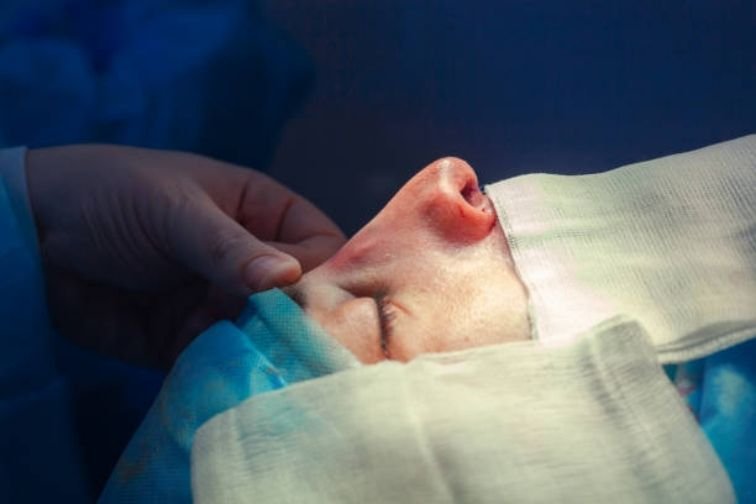
One of the most frequently asked questions by patients experiencing nasal valve collapse is, “How is the nasal valve corrected with revision rhinoplasty?” To give a clear answer to this question, the procedure is performed using an open technique, where the skin is lifted through a small incision under the nose, making the valve area fully visible. This allows the problem causing the valve collapse to be identified, and if the patient’s existing septal cartilage is suitable, a graft is taken from there. The harvested cartilage is then shaped into specific graft forms by the surgeon.
For example, spreader grafts are placed on both sides of the bridge of the nose to support the upper lateral cartilages, thereby widening the internal valve angle. Batten grafts are placed on the weak parts of the side walls of the nose to prevent inward collapse during breathing. If the valve is severely collapsed, a butterfly graft is used to both support and open the valve. These grafts are then sutured with millimeter precision, and the nasal roof is rebuilt. If necessary, the nasal bridge is reshaped or reinforced.
Finally, the skin is closed, and the nose is supported with protective splints. As a result of this procedure, the nasal valve is functionally strengthened, collapse is prevented, and the patient can breathe more comfortably.
Benefits of Revision Rhinoplasty in Nasal Valve Collapse
Revision rhinoplasty procedures offer benefits in cases of nasal valve collapse. These benefits, when examined in detail, are as follows:
- Improves Functional Breathing: Collapse and narrowing of the nasal valve area are supported with grafts to facilitate breathing.
- Prevents Valve Collapse: Special techniques such as spreader, batten, or butterfly grafts prevent the nasal wing from collapsing inward during breathing.
- Provides Structural Support: Weakened cartilage areas are reinforced using septum, ear, or rib cartilage.
- Corrects Valve Angle: The valve is widened to its anatomical angle, optimizing airflow.
- Improves Aesthetic Appearance: Collapses on the nasal bridge and side walls are repaired, giving the nose a natural and symmetrical appearance.
- Improves Quality of Life: Breathing comfort is provided in daily life, sleep quality improves, and breathing during exercise becomes easier.
- Offers a Permanent Solution: Functional and aesthetic improvement is maintained for a long time because structural support is rebuilt.
How Long Does Revision Rhinoplasty Take for Nasal Valve Collapse?
Another frequently asked question regarding revision rhinoplasty for nasal valve collapse is how long the surgery takes. To provide clear and detailed information on this matter, we can say that the duration of the surgery varies depending on the patient’s previous surgical history, the degree of valve collapse, and the amount of grafting required. In this context, the procedure typically takes between 2 and 4 hours; however, in more complex cases, this time may be longer. In this regard, the process of rhinoplasty surgery for nasal valve collapse is not very long, because the surgery proceeds in very planned and systematic steps.
Recovery Process in Revision Rhinoplasty for Nasal Valve Collapse
The recovery process in revision rhinoplasty for nasal valve collapse must be carefully managed in terms of both regaining nasal function and preserving the aesthetic result. For this reason, immediately after surgery, the nose is usually supported with protective splints and light packing; this ensures that both the skin and cartilage grafts remain stable. Additionally, swelling, bruising, and mild discomfort for a few days are normal; keeping the head slightly elevated and applying cold compresses are recommended during this period. Furthermore, the splints and pads are removed after the first 1–2 weeks, but the nasal structure is still sensitive during this period. The cartilage where the grafts are placed gradually integrates with the body and begins to provide support within approximately 4–6 weeks. Swelling and bruising usually decrease significantly within 2–3 weeks. Consequently, throughout this process, patients should avoid strenuous exercise, direct blows to the nose, and smoking.
If you are experiencing issues such as nasal valve collapse and are seeking a permanent solution, you can contact the expert doctors at FaceAesthetics, specialists in revision rhinoplasty in Turkey.
Frequently Asked Questions
Nasal valve collapse is a structural problem caused by the loss of cartilage support at the narrowest point of the airway inside the nose. Collapse in this area causes the inner wall of the nose to move inward when breathing, resulting in a significant narrowing of airflow. In this context, revision rhinoplasty reconstructs the nasal valve area, reinforces the collapsed cartilage, restores the valve angle to its correct anatomical width, and permanently corrects breathing function.
Recurrence of collapse in the nasal valve area after revision rhinoplasty performed with the correct techniques is quite rare. This is because revision rhinoplasty surgery provides adequate and solid cartilage support to the valve area. However, weak skin structure, smoking, postoperative trauma, or severe tissue loss from previous surgeries can increase the risk of collapse. Other than these, collapse of the nasal valve area after revision rhinoplasty performed with appropriate surgical methods is not expected.
Rib cartilage is not required in every case of nasal valve collapse. However, in patients who have undergone multiple rhinoplasties, have depleted existing cartilage, or have severe valve collapse, rib cartilage is preferred because a strong, voluminous, and durable cartilage source is required. Therefore, rib cartilage is only mandatory in cases of severe structural loss; it is not a standard requirement for every patient.