Nasal obstruction is a common issue that significantly impacts daily quality of life. Septoplasty and nasal valve repair are functional nasal surgeries performed to alleviate this obstruction, ensuring healthy and comfortable breathing. As of 2026, modern techniques for these operations are significantly enhancing patients’ quality of life.
A healthy nose plays a critical role in the body’s oxygen intake. Nasal obstruction can negatively affect many areas, from sleep quality and exercise performance to the sense of smell and overall mood. Septoplasty and nasal valve repair aim to correct structural problems within the nose, eliminating these adverse effects. Turkey stands out with world-class expertise and modern technology in functional nasal surgery clinics. This guide, updated with 2026 information, offers a comprehensive roadmap for those seeking to regain optimal breathing.
Key Anatomical Issues Causing Nasal Obstruction
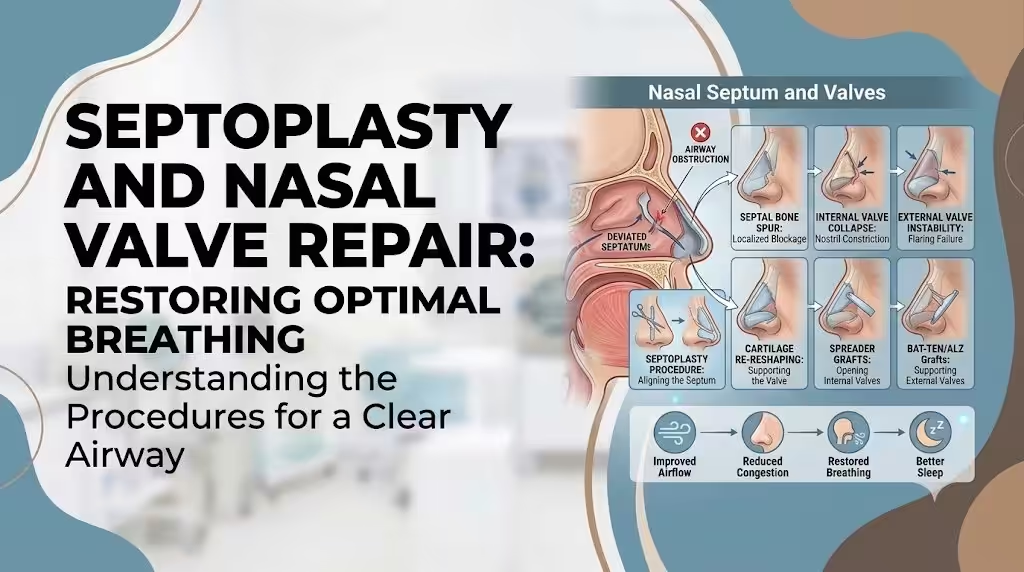
Nasal obstruction typically results from anatomical problems that narrow the airway inside the nose. Foremost among these issues are a crooked nasal septum (septal deviation) and weakness of the nasal sidewalls (nasal valve insufficiency). These two conditions directly affect nasal airflow, leading to breathing difficulties, and often occur together.
Common causes of nasal obstruction include:
- Deviated Septum: A crooked nasal septum, the wall dividing the nostrils, can block airflow.
- Nasal Valve Insufficiency: Weakness or collapse of the nasal sidewalls, which can cause the nostrils to close, especially during inhalation.
- Turbinate Hypertrophy: Enlargement of the turbinates, which are structures inside the nose that warm and humidify air.
- Nasal Polyps: Benign, non-cancerous growths that develop in the lining of the nose or sinuses.
- Allergies and Chronic Sinusitis: Inflammation and swelling of the nasal tissues due to allergic reactions or persistent sinus infections.
- Trauma: Deformities resulting from injuries or impacts to the nose.
Deviated Septum: The Crooked Nasal Wall
Septal deviation is a condition where the wall of cartilage and bone (septum) that divides the nose into two equal parts is crooked. This deviation can narrow one or both nostrils, making breathing difficult.
What is a deviated septum and what are its symptoms?
A deviated septum refers to a structural abnormality of the nasal septum, which can be present from birth, develop over time, or result from nasal trauma (e.g., impact, accident). This condition can manifest as C-shaped or S-shaped curves, or as bone/cartilage spurs. The symptoms are not limited to aesthetic concerns; they can lead to secondary health problems such as sleep apnea, chronic snoring, frequent sinus infections, impaired sense of smell, nosebleeds, and headaches. Therefore, treating a deviated septum is crucial for overall health and quality of life.
Nasal Valve Insufficiency: Weakness of the Nasal Sidewalls
The nasal valve is a critical region forming the narrowest part of the nose, responsible for regulating airflow. It consists of two main components: the internal and external valves. Nasal valve insufficiency is a condition where the cartilaginous structures in this area weaken, or the nasal sidewalls collapse inward during breathing, often due to trauma, aging, or previous nasal surgeries.
Although nasal valve insufficiency is often overlooked or misdiagnosed, it is a significant cause of breathing difficulties. The most prominent symptom is nasal obstruction that worsens with exertion. Simple examination methods like the Cottle test can be used for diagnosis; in this test, improved breathing when the nasal sidewalls are gently pulled outward indicates valve insufficiency.
Symptoms and diagnosis of nasal valve insufficiency:
- Worsening nasal obstruction during exertion (e.g., exercising, climbing stairs).
- Visible collapse of the nasal sidewalls during inhalation.
- Sensation of unilateral or bilateral nasal obstruction.
- Sleep disturbances and snoring.
- Physical examination and endoscopic evaluation performed by an ENT specialist.
- Assessment of breathing ease using the Cottle test.
Diagnosis and Evaluation Process: The Importance of Accurate Diagnosis
Accurate diagnosis is vital for an optimal treatment plan. A comprehensive determination of the issues causing nasal obstruction forms the foundation of surgical success and guarantees long-term patient satisfaction. Incorrect or incomplete diagnoses can lead to persistent breathing problems or the emergence of new issues after surgery.
How is nasal obstruction diagnosed?
- ENT Specialist Examination: The patient’s complaints are heard, and the general nasal structure is evaluated.
- Endoscopic Evaluation: The inside of the nose is examined in detail with the aid of a thin camera, observing septal deviation, turbinate hypertrophy, and the condition of the nasal valve.
- Cottle Test: The nasal sidewalls are gently pulled outward to check if breathing becomes easier, which is an important indicator for nasal valve insufficiency.
- Acoustic Rhinometry: Measures the cross-sectional area of the nasal airway to determine the location and degree of obstruction.
- Rhinomanometry: Measures nasal airflow and pressure differences to assess nasal resistance.
- Computed Tomography (CT) Scan: If necessary, used for detailed examination of the sinuses, bone structures, and detection of complex deviations.
Septoplasty Surgery: Correcting the Nasal Septum
Septoplasty is a surgical procedure aimed at opening the nasal airway by correcting a crooked nasal septum, which is the middle wall of the nose. The primary goal of the surgery is to enable the patient to breathe more comfortably and to alleviate secondary health problems associated with septal deviation.
Septoplasty is performed on patients experiencing chronic nasal obstruction, recurrent sinus infections, nosebleeds, snoring, and sleep apnea. A detailed ENT examination and evaluation are conducted before the surgery. It is typically performed under general anesthesia and lasts approximately 30-90 minutes. Surgical techniques include endoscopic and open approaches. As of 2026, modern septoplasty techniques have become more comfortable with minimally invasive approaches, accelerating the recovery process. Cartilage-sparing techniques preserve the nasal structure while ensuring functional improvement.
What is septoplasty and its key steps:
- Definition: A surgical procedure that corrects a crooked nasal septum to improve internal nasal airflow.
- Benefits: Easier breathing, reduced snoring, decreased frequency of sinusitis, improved sleep quality.
- Pre-Surgery: Detailed examination, blood tests, anesthesia evaluation.
- Anesthesia: Usually performed under general anesthesia.
- Surgical Technique: Crooked cartilage and bone pieces are reshaped or removed through incisions made inside the nose.
- Duration: Approximately 30-90 minutes.
- Recovery: Generally fast, with increased comfort thanks to modern splints.
Nasal Valve Repair: Optimizing Airflow
Nasal valve repair is a specialized surgical procedure designed to address airflow problems caused by weakness or collapse of the nasal sidewalls. This surgery strengthens the nasal valve area, ensuring that the nostrils remain open during breathing.
It is performed on patients diagnosed with nasal valve insufficiency, especially those experiencing nasal obstruction that worsens with exertion. Pre-surgical preparation involves a detailed examination and anesthesia evaluation, similar to septoplasty. It is typically performed under general anesthesia. Surgical techniques are quite varied and are determined based on the patient’s specific condition. The valve area is supported using grafting techniques (such as spreader grafts, alar batten grafts), suture techniques, or special implants. Nasal valve repair is a more specific and specialized field than septoplasty. Different graft materials (autologous cartilage or synthetic implants) are chosen by the surgeon based on the patient’s condition. The surgery duration can vary depending on the technique applied and combined procedures, but typically lasts 1-2 hours.
Nasal valve repair techniques and success rates:
- Spreader Grafts: Widen the nasal dorsum to support the internal nasal valve.
- Alar Batten Grafts (Lateral Crural Strut Grafts): Strengthen the nasal sidewalls to prevent the collapse of the external nasal valve.
- Suture Techniques: Reposition cartilage structures using special sutures to support the valve.
- Implant-Supported Techniques: Provide permanent support to the valve area using biocompatible implants.
- Success Rates: When performed by experienced surgeons, nasal valve repair generally yields successful results in 85-95% of cases, significantly improving patients’ breathing quality.
Combined Septoplasty and Nasal Valve Repair
Nasal obstruction often stems not from a single anatomical problem, but from a combination of multiple factors such as septal deviation and nasal valve insufficiency. Therefore, septoplasty and nasal valve repair procedures are frequently performed simultaneously in a single surgical session. This combined approach offers a range of advantages for patients.
Combined surgery allows the patient to undergo a single anesthesia and experience a single recovery period, which optimizes overall comfort and the healing process. An integrated approach addresses issues in both the middle and lateral parts of the nasal airway concurrently, enabling the achievement of optimal and lasting results. This maximizes the positive effects on the patient’s overall health and significantly enhances their quality of life.
Benefits of combined nasal surgeries:
- Single anesthesia and single surgical procedure.
- A unified recovery period.
- Simultaneous resolution of multiple issues causing nasal obstruction.
- More comprehensive and lasting improvement in breathing.
- Significant increase in overall quality of life.
Post-Surgery Recovery Process and Care (2026 Guide)
The recovery process after septoplasty and nasal valve repair is critical for patient comfort and the success of the surgery. As of 2026, modern post-surgical care protocols have evolved to ensure patients experience less discomfort and recover more quickly.
Step-by-step recovery guide after septoplasty/nasal valve repair:
- First 24 Hours: Mild pain and nasal congestion are normal on the first day after surgery. These are controlled with pain relievers. Nasal packing or silicone splints may be present inside the nose. Lying with the head elevated helps reduce swelling.
- Pain Management: Regularly using pain relievers prescribed by your doctor will enhance your comfort.
- Nasal Packing/Silicone Splints: Modern packing is typically made of silicone, allows for breathing, and is easily removable. It is usually removed within 2-7 days.
- Swelling and Bruising: Especially after nasal valve repair or combined surgeries, mild swelling and bruising around the nose and eyes may occur. Applying ice and keeping the head elevated helps alleviate this. It usually subsides within 1-2 weeks.
- Breathing Exercises: Nasal irrigation and breathing exercises recommended by your doctor support internal nasal hygiene and the opening of the airway.
- Nasal Irrigation: After the packing is removed, it is important to use saline sprays or nasal irrigation kits for internal nasal cleansing.
- Physical Activity Restrictions: For the first few weeks, avoid strenuous sports, bending over, and heavy lifting. Light walking is permissible.
- Diet: Soft and warm foods should be preferred in the first few days. Ample fluid intake is important.
- Return to Work/School: Generally, you can return to desk jobs or school within one week.
Potential Risks and Complications
As with any surgical procedure, septoplasty and nasal valve repair surgeries carry some risks and complications. However, these risks are rare and can be minimized by choosing an experienced surgeon.
- Bleeding: Mild oozing after surgery is normal, but severe bleeding is rarely seen.
- Infection: The risk of infection in the surgical area is low and is controlled with antibiotics.
- Numbness: Temporary numbness in the nasal tip or upper teeth may be experienced.
- Smell Disturbances: Rarely, temporary or permanent problems with the sense of smell may occur.
- Septal Perforation: Very rarely, a small hole may form in the septum.
- Persistent Breathing Issues: The situation where the expected improvement after surgery is not complete, or problems persist.
- Aesthetic Changes: Septoplasty typically does not cause a significant change in the shape of the nose, but nasal valve repair may lead to a slight widening of the nasal sidewalls.
Expected Outcomes and Long-Term Benefits
The primary goal of septoplasty and nasal valve repair surgeries is to improve patients’ quality of life. The improvements achieved through these surgeries are not limited to physical benefits but also have positive effects on psychological well-being and social life.
Long-term benefits of the surgery:
- Improved Breathing: More comfortable and deeper breathing by eliminating nasal obstruction.
- Increased Sleep Quality: More restful sleep due to reduced snoring and sleep apnea symptoms.
- Reduced Snoring: A significant decrease in the intensity of snoring as the airway is opened.
- Improved Exercise Tolerance: Enhanced performance in physical activities thanks to better oxygen intake.
- Improved Sense of Smell and Taste: Sharpened senses of smell and taste with improved internal nasal airflow.
- Decreased Frequency of Sinus Infections: Reduced risk of infection due to better ventilation of the nose and sinuses.
- Enhanced Overall Quality of Life: Increased energy, improved mood, and easier participation in social activities resulting from better breathing.
Choosing the Right Surgeon and Clinic: 2026 Criteria
Selecting the right surgeon and clinic is paramount for achieving successful outcomes in functional nasal surgery. Especially as of 2026, working with an experienced specialist who keeps up with current technology and treatment approaches directly impacts the success of the surgery. Turkey, with its health tourism potential and expert medical staff, hosts many clinics offering services at international standards.
How to choose the best nasal surgeon:
- ENT Specialization and Experience: Look for board-certified ENT specialists with extensive experience specifically in functional nasal surgery, including septoplasty and nasal valve repair.
- Patient Reviews and Testimonials: Research online reviews, patient forums, and testimonials to gauge other patients’ experiences and satisfaction levels.
- Before & After Photos: Request to see before and after photos of previous patients to assess the surgeon’s aesthetic and functional results.
- Technology and Facilities: Ensure the clinic utilizes state-of-the-art equipment and adheres to the highest standards of hygiene and patient safety.
- Communication and Trust: Choose a surgeon who communicates clearly, answers all your questions thoroughly, and with whom you feel a sense of trust and comfort.
- Accreditation and Certifications: Verify the surgeon’s and clinic’s professional accreditations and certifications, ensuring they meet national and international medical standards.
Septoplasty and nasal valve repair can provide significant improvements for patients experiencing persistent nasal obstruction caused by structural problems such as septal deviation or nasal valve insufficiency. Because these conditions can occur together, an accurate diagnosis and a personalized treatment plan are essential for addressing the underlying cause of breathing difficulties. A comprehensive evaluation by an experienced ENT specialist can determine whether septoplasty, nasal valve repair, or a combination of both procedures is appropriate. Choosing a qualified surgeon with specific experience in functional nasal surgery, modern diagnostic techniques, and patient-centered care can help support better breathing, recovery, and long-term quality of life.
Frequently Asked Questions
Nasal valve repair is a surgical procedure designed to correct weakness or collapse in the nasal valve area. The procedure strengthens the nasal sidewalls or internal nasal structures to improve airflow, particularly when nasal obstruction becomes more noticeable during physical activity.
Septoplasty primarily addresses problems caused by a deviated nasal septum, while nasal valve repair focuses on weakness or collapse of the nasal valve area. Since nasal obstruction can have multiple structural causes, both procedures may sometimes be performed together.
Yes. When both septal deviation and nasal valve insufficiency contribute to nasal obstruction, septoplasty and nasal valve repair can be performed during the same surgical procedure. A combined approach allows both areas of the nasal airway to be addressed during a single operation and recovery period.
Diagnosis generally involves a detailed examination by an ENT specialist. Depending on the patient’s symptoms and anatomy, evaluation may include nasal endoscopy, the Cottle test, acoustic rhinometry, rhinomanometry, or CT imaging when necessary.
A deviated septum can cause difficulty breathing through one or both nostrils, chronic nasal obstruction, snoring, recurrent sinus problems, nosebleeds, reduced sense of smell, and headaches. Symptoms can vary depending on the severity and location of the deviation.
The primary purpose of nasal valve repair is to improve airflow by strengthening or supporting the nasal valve area. The expected improvement depends on the underlying anatomy and the specific cause of the obstruction.
According to the information in this guide, septoplasty generally takes approximately 30–90 minutes. The exact duration can vary depending on the complexity of the case and whether additional procedures are performed.
Nasal valve repair can vary in duration depending on the technique used and whether it is combined with another procedure. The guide states that it typically takes approximately 1–2 hours.
Recovery varies between patients and depends on the procedures performed. Nasal congestion and mild discomfort are common during the initial recovery period. Silicone splints, when used, are generally removed within 2–7 days, while swelling and bruising may improve over approximately 1–2 weeks.
Improving nasal airflow through correction of a deviated septum may help reduce nasal obstruction and can contribute to better sleep and reduced snoring in appropriate patients. However, the underlying cause of sleep or snoring problems should be evaluated individually.