Nasal asymmetry after rhinoplasty is one of the most common concerns patients have following the rhinoplasty process, often leading to unnecessary anxiety. While this condition is seen in many patients, it is not something you should worry about or panic over. This is because there are permanent solutions for nasal asymmetry that occurs after rhinoplasty. To guide you on this matter, we have created the content titled “Nasal Asymmetry After Rhinoplasty.” You can learn more about the topic by reviewing our content. We wish you all good health and happy reading.
What is Nasal Asymmetry After Rhinoplasty?
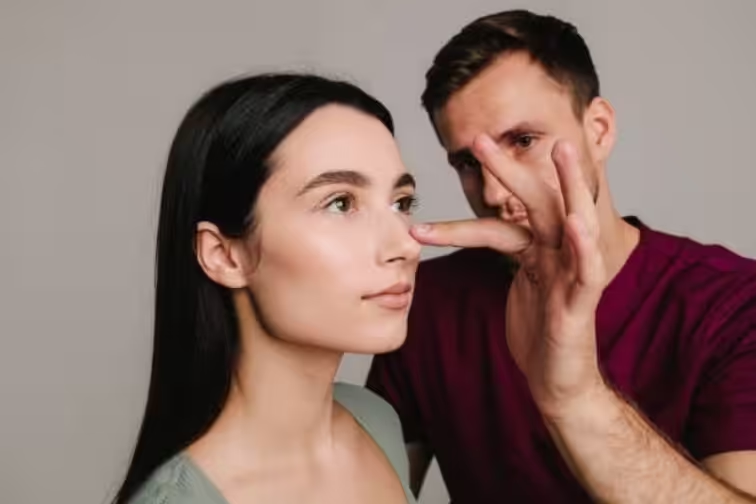
Nasal asymmetry after rhinoplasty is the occurrence of differences in shape, height, volume, or position between the right and left sides of the nose following nose surgery. This asymmetry is most often noticeable in the bridge of the nose, the tip of the nose, the nostrils, or the nasal wings. In this case, factors related to the healing process usually come to the fore. For example, uneven distribution of swelling on both sides after surgery and different responses of cartilage and bone tissues to the healing process can cause nasal asymmetry. In addition, existing nose and facial asymmetries before rhinoplasty may become more pronounced after surgery. In most cases, these asymmetries are temporary and diminish over time as the nasal tissues fully heal. While shape differences observed in the first few months are generally considered normal, persistent noticeable asymmetries after the healing process is complete warrant evaluation by a specialist physician. In such cases, follow-up, supportive measures, or revision procedures may be planned if deemed necessary.
The Role of Swelling in Nasal Asymmetry After Rhinoplasty
The role of swelling (edema) in nasal asymmetry after rhinoplasty is one of the most prominent and common causes during the healing process. This condition arises because the edema that forms after surgery does not spread evenly throughout the nose. Edema can persist longer in areas with more soft tissue and cartilage content, such as the tip of the nose and the nasal wings. Therefore, fluctuations in swelling throughout the day, depending on sleeping position, physical activity level, and the body’s healing speed, can cause the asymmetry to be more noticeable at times. As a result, in most cases, this type of nasal asymmetry is temporary, and as the swelling subsides, the nasal contours become more symmetrical. However, since it may take months for the swelling to completely resolve, it is important not to consider the shape differences seen in the early stages as permanent and to monitor the process under the supervision of a specialist physician.
The Effect of Scar Tissue on Nasal Asymmetry
The effect of scar tissue on nasal asymmetry is another important factor that must be carefully evaluated during the healing process after rhinoplasty. This factor develops after surgery and can vary in intensity and severity from person to person. Thus, it can cause increased hardening or thickening on one side of the nasal tissues, leading to differences in shape and volume between the right and left sides. Scar tissue developing in areas with high cartilage support and soft tissue content, such as the tip of the nose and the nasal wings, can cause the contours of the nose to appear asymmetrical. As a result, since the maturation and softening of scar tissue over time can take months, asymmetries noticed in the early stages are often temporary. However, in cases where asymmetries remain noticeable even after the healing process is complete, massage, injection applications, or revision procedures may be planned as deemed necessary by a specialist physician.
Common Causes of Nasal Asymmetry After Rhinoplasty
There are several common causes of nasal asymmetry after rhinoplasty. These causes may be related to the individual or may occur during surgery. In this context, the most common causes of nasal asymmetry are as follows:
- Swelling
Swelling that occurs after surgery may not be evenly distributed on both sides of the nasal tissues. In this case, one side of the nose may appear more swollen or higher. This can result in temporary or, rarely, permanent nasal asymmetry. - Formation of Scar Tissue
Scar tissue that develops during the healing process may vary in intensity from person to person. For this reason, increased hardening on one side may lead to an asymmetrical appearance in the contours of the nose. - Differences in Cartilage and Bone Tissue Healing
Cartilage and bone tissue may not respond to the postoperative healing process in the same way on both sides. This can cause noticeable differences in shape and position on the bridge or tip of the nose. - Pre-existing Nose or Facial Asymmetries
Any existing nasal or facial asymmetries prior to rhinoplasty may become more pronounced in the postoperative period. Therefore, surgical intervention may not always completely eliminate nasal asymmetries. - Sleeping Position and External Factors
Lying on the same side continuously after surgery or applying involuntary pressure to the nose may cause unilateral swelling. This situation may trigger temporary or permanent asymmetry during the healing process. - Trauma and Injuries
Blows to the nose during the healing process can negatively affect tissue healing. Such trauma can lead to permanent deformities and asymmetry in the nasal structure. - Surgical Technique and Tissue Structure
The surgical technique used and the patient’s tissue structure directly affect the healing process. Nasal asymmetry may become more pronounced, especially in individuals with thick skin.
In Which Areas Can Nasal Asymmetry Be Seen After Rhinoplasty?
Nasal asymmetry can be seen in some areas after rhinoplasty. To discuss these areas in more detail, they are as follows:
- Nasal Dorsum
- Nasal Tip
- Nasal Wings
- Nostrils
- Nasal Septum
- Nasal Root
How Is Nasal Asymmetry Corrected?
The answer to the question “How is nasal asymmetry corrected?” varies depending on the cause and degree of asymmetry and the patient’s healing process. For this reason, the degree of nasal asymmetry must be analyzed in detail before the procedure. For example, most cases of nasal asymmetry seen in the early period after rhinoplasty are usually related to edema, scar tissue, and tissue healing, and therefore resolve spontaneously with follow-up and observation. In addition, massage, taping, and check-ups recommended by the physician can help distribute the edema more evenly. On the other hand, in cases of mild and limited asymmetry, symmetry can be achieved with fillers or injections without the need for surgical intervention. However, after the healing process is complete, usually 6-12 months later, revision rhinoplasty may be considered for asymmetries that remain noticeable and cause aesthetic or functional problems. Therefore, the method to be used must be planned and determined on an individual basis, following a detailed evaluation by a specialist physician.
What Should You Pay Attention to Avoid Nasal Asymmetry After Rhinoplasty?
To avoid nasal asymmetry after rhinoplasty, you need to pay attention to certain points. In this context, the points you should pay attention to are as follows:
- Postoperative medications, care instructions, and follow-up appointments should be taken seriously. This is crucial for the healthy progression of the recovery process.
- Blows to the nose during the healing process can increase the risk of asymmetry. Therefore, caution should be exercised in crowded environments and during activities involving contact.
- Especially during the first few weeks, you should lie on your back and avoid positions that could put pressure on your nose.
- Be very careful with nose massage and taping, as unconscious massage or taping can damage the nasal tissues and lead to asymmetry.
- Avoid heavy exercise, excessively hot environments, and activities such as saunas, as these can cause increased swelling.
- Follow-up appointments are crucial for assessing whether the healing process is progressing correctly, so be sure not to miss any appointments.
- Smoking slows down tissue healing, while alcohol can increase swelling. Therefore, alcohol and smoking should be avoided completely.
- Habits such as wearing glasses, sleeping face down, or touching the nose frequently can negatively affect the healing process. Therefore, you should be very careful.
- It may take 6–12 months for the nose to take its final shape. It should be remembered that minor shape differences are normal during this process.
Treatment Methods for Nasal Asymmetry After Rhinoplasty
There are several treatment methods for nasal asymmetry after rhinoplasty. These treatment methods vary depending on the condition of the nasal asymmetry. The treatment methods in question are as follows:
Revision Rhinoplasty
Revision rhinoplasty turkey is a surgical method preferred for correcting permanent nasal asymmetries following rhinoplasty. This method is generally performed at least 6–12 months after the initial surgery. This allows for significant healing of the nasal tissues and enables a clear assessment of the actual asymmetry. In this context, revision rhinoplasty aims to correct permanent deformities that develop in the nasal bones or cartilage structures due to the healing process. In particular, drooping of the tip of the nose, curvature of the bridge of the nose, and noticeable asymmetries between the nostrils or the wings of the nose can be addressed in this context. As a result, revision rhinoplasty requires experience and detailed planning since it involves working on previously operated tissues and is planned individually for each patient. The goal is to improve the aesthetic appearance and, if present, to resolve breathing problems.
Non-Surgical Rhinoplasty
Non Surgical Rhinoplasty Turkey offers a non-surgical alternative for mild and limited nasal asymmetries that occur after rhinoplasty. In this method, filler applications are generally used to balance small differences in volume or height between the nasal contours. Minor curvatures on the bridge of the nose, small depressions, or minimal differences that disrupt the perception of symmetry can be camouflaged with non-surgical rhinoplasty. However, this method does not correct structural and pronounced asymmetries; it is more of a temporary solution aimed at improving aesthetic appearance. The effect of this solution may diminish over time and therefore needs to be repeated at certain intervals. For this reason, non-surgical rhinoplasty is considered an alternative to revision surgery or a temporary option rather than a permanent solution.
When Should You Be Concerned About Nasal Asymmetry After Rhinoplasty?
When to be concerned about nasal asymmetry after rhinoplasty should be evaluated based on the stage of the healing process and the course of the asymmetry. Therefore, asymmetry seen in the nose during the first weeks and even the first few months after rhinoplasty is mostly due to edema, tissue stiffness, and wound healing and is generally considered normal. However, if the asymmetry becomes more pronounced over time rather than decreasing, if there is no visible improvement in the shape of the nose, or if the asymmetry is accompanied by difficulty breathing, pain, or functional problems, a specialist should be consulted. In particular, if significant shape differences persist even after 6 months have passed since the surgery, or if asymmetry is still noticeable even though the nasal tissues have largely healed after 12 months, a detailed evaluation is required. In such cases, it is important that the process is handled under the supervision of a specialist physician so that appropriate intervention options for the early or late period can be determined.
Frequently Asked Questions
In most cases, no. This is because nasal asymmetry usually develops depending on the healing process, edema distribution, and tissue structure. However, getting hit in the nose after surgery, not following the doctor’s recommendations, or applying pressure to the nose too early can increase the risk of asymmetry.
Yes. Especially in the early postoperative period, consistently sleeping on the same side can cause swelling to remain in that area for a longer period. This can lead to temporary nasal asymmetry.
Controlled cold application, as recommended by the doctor, can help reduce swelling and make the asymmetry less noticeable. However, direct pressure should never be applied to the nose during this procedure.
Yes. Nasal asymmetry observed in the first weeks and months after surgery is often considered normal and is usually related to swelling and the healing process.
No. It does not occur in every patient, but mild and temporary asymmetries may develop in many patients. Therefore, the healing process may vary from person to person.
Massage and taping, when recommended by a physician, can help distribute swelling evenly. However, uninformed practices may increase asymmetry.
No. The human face is not naturally perfectly symmetrical. Very slight asymmetries are considered normal even after a successful rhinoplasty.
Yes. The nasal tip is the area most affected by healing due to its cartilage and soft tissue structure. Therefore, nasal tip asymmetry is a common occurrence after rhinoplasty.