Will There Be Any Scars After Rhinoplasty?
Whether scarring remains after rhinoplasty largely depends on the patient’s individual skin structure. Additionally, the type of suture material used and the patient’s post-operative care routine are critical factors influencing the scarring process. Therefore, the wound healing timeline must be evaluated individually for every patient. In individuals with thick, oily, or darker skin tones, scars may remain slightly more noticeable for a longer period. Conversely, in patients with thin and fair skin, scars tend to fade much more rapidly over time. Furthermore, strictly adhering to your surgeon’s post-operative instructions—such as maintaining regular wound care and practicing diligent sun protection—contributes significantly to keeping scars to an absolute minimum. With precise incision planning and cosmetic suturing techniques performed by an experienced surgeon, post-rhinoplasty scars in most cases either remain completely invisible or fade to an imperceptible level over time.Why Do Scars Form After Rhinoplasty?
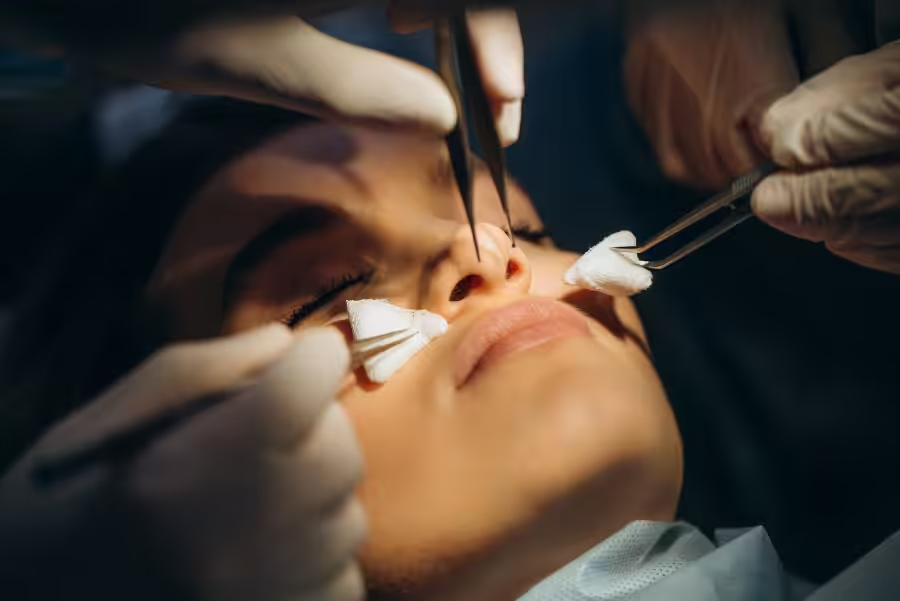
Scar formation after nasal surgery is an expected biological response. It occurs primarily as a result of the surgical technique employed, the patient’s skin quality, and the overall healing process. In open rhinoplasty, a small incision is made across the strip of skin separating the nostrils (the columella) to elevate the nasal skin. As a result, a tiny incision mark can be present in this area. The surgeon’s expertise and the delicate stitching techniques utilized are paramount in determining how faint this scar will ultimately become. With proper care and attention, post-rhinoplasty scars generally fade and become inconspicuous over time, though minimal scarring may remain permanent in a few individuals.How Does Scar Tissue Form After Rhinoplasty?
Scar tissue forms after rhinoplasty as part of the body’s natural healing mechanism. During surgery, incisions are made to separate and reshape underlying tissues, prompting the body to send restorative cells to these areas. Initially, mild swelling, bruising, and edema appear at the incision site. During this phase, cells known as fibroblasts produce collagen to close the wound, laying the foundation for scar tissue. Over time, these collagen fibers reorganize, soften, and assume a more natural texture. However, in certain patients—particularly those with thick skin or those who encounter healing complications—this scar tissue can become firmer, raised, or irregular. In such instances, revision surgery may be considered, or non-surgical treatments recommended by your doctor—such as silicone gels, targeted massages, or cortisone injections—may be applied. With correct aftercare and regular medical monitoring, most scar tissue softens over time without causing aesthetically concerning marks.Signs of Excessive Scar Tissue After Rhinoplasty
Excessive scar tissue displays distinct indicators before turning into a permanent mark. Early signs of excessive scar tissue development include:- Hardness or Swelling at the Nasal Tip: Persistent, firm, or palpable tissue accumulation in specific areas of the nose long after surgery may indicate scar tissue buildup.
- Asymmetry or Deformity: Excessive scar tissue can lead to unwanted bumps, indentations, or contour asymmetries across the nose.
- Tightness in the Skin: Experiencing a sensation of tightness or a lack of elasticity in the operated area can be a symptom of internal scarring.
- Breathing Difficulties: Internal scar tissue can narrow the nasal airway, making breathing more challenging.
- Red, Dark, or Thickened Scars: Darker, raised, or widened marks along the columella following open rhinoplasty can be a sign of hypertrophic scarring.
- Prolonged Recovery: Swelling and firmness that persist for months instead of subsiding within a few weeks raise suspicion of excessive scar tissue formation.
Types of Scars After Rhinoplasty
Post-rhinoplasty scars vary according to the shape, orientation, and location of the surgical incisions. They are broadly categorized into open rhinoplasty scars and closed rhinoplasty scars. The width and depth of the scar, as well as whether it is situated on internal or external tissues, play a crucial role. The overall scope of the surgery performed by the surgeon directly influences scar formation. Scar tissue along the nasal bridge can take longer to resolve due to the manipulation of underlying bone and cartilage. In patients with thick nasal skin, these marks may take longer to fade completely.Impact of Open vs. Closed Rhinoplasty on Scarring
The choice between open and closed rhinoplasty directly dictates the location and visibility of surgical marks. As the operational field expands, the potential visibility of incisions may increase. However, surgeon experience, surgical approach, skin thickness, age, genetic predisposition, and overall health significantly influence final scar outcomes. Open Rhinoplasty Scarring: An incision is made along the columella (the tissue strip between the nostrils) to access internal cartilage and bone. With skilled execution and meticulous aftercare, the visibility of this external scar can be reduced to a minimal, barely noticeable line. Closed Rhinoplasty Scarring: In closed rhinoplasty, no external incisions are made. Although scar tissue forms inside the nostrils during healing, it remains entirely hidden within the nasal cavity.Seasonal Effects on Scar Healing After Rhinoplasty
Seasonal environmental factors can impact surgical recovery. In warmer weather, blood vessels dilate, slightly increasing the risk of bleeding. Additionally, sweating around suture lines during summer can prolong wound closure. Consequently, seasons influence scar maturation differently:- Summer Considerations: Patients must strictly avoid direct sun exposure for several months following rhinoplasty. Sunburned, healing skin is prone to hyperpigmentation and permanent scarring. High-spectrum sunscreen application is mandatory to protect vulnerable tissues.
- Winter Advantages: Rhinoplasty performed during winter generally carries a lower risk of sun-induced hyperpigmentation. Staying out of intense sunlight requires less effort, sunscreen protection lasts longer, and cool weather reduces skin heat irritation. Consequently, columellar and internal nasal incisions often heal more smoothly during cooler months.
The Role of Skin Type in Post-Rhinoplasty Scarring
Skin characteristics differ significantly among individuals and genders. Male skin tends to be thicker, whereas female skin is often thinner. Thicker skin requires deeper incisions during surgery to lift the dermal layer, which can naturally extend the overall healing phase. On thin skin, visible post-operative scarring is less common. Delicate incisions heal rapidly, and superficial wounds form light scabs that resolve quickly without leaving prominent marks. Conversely, conditions like keloids result in more pronounced, raised scars that require an extended healing timeline to fade. Factors such as gender, surgical skill, seasonal conditions, and general health interact with skin type to shape the overall recovery process.Scars After Rhinoplasty: Month-by-Month Timeline
Month 1: The Initial Phase of Healing
The first month following rhinoplasty represents the most active phase of wound healing. In open rhinoplasty, although the incision line under the nose (the columella area) has fully closed, the scar may still remain noticeably visible. Redness, slight raised texture, and sensitivity to touch are completely normal during this period. Because the underlying subcutaneous tissues are still reorganizing, the mark retains a “fresh wound” appearance and can draw attention. During this initial stage, proper wound care, strict sun protection, and adherence to your surgeon’s instructions will directly determine the ultimate quality and invisibility of the scar in the months ahead.
Month 2: Continued Redness and Tissue Firmness
As healing progresses during the second month, the scar may still retain a pinkish or reddish tone. This indicates active blood circulation and ongoing tissue regeneration in the area. Additionally, a slight firmness or fullness may be felt along the incision line, which is a clear sign that the subcutaneous healing process is still actively underway. Although the mark may still be noticeable upon close inspection, it is generally subtle and easily concealed with light makeup. Patience is crucial at this stage, as the scar is still in its early phase of recovery.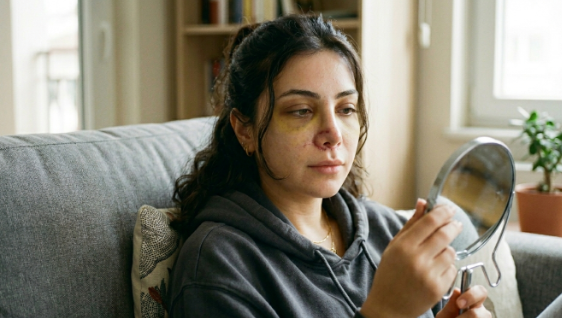
Month 3: The Beginning of Visible Improvement
By the third month, a noticeable improvement in the scar becomes apparent. Redness gradually fades, the mark turns to a much paler tone, and any remaining raised texture reduces significantly. As the skin surface becomes smoother, the scar tissue also begins to soften. During this stage, the mark is usually noticeable only upon close inspection. Patients often consider this month as the first real milestone where healing becomes clearly visible.
Months 4–6: Significant Flattening and Tone Matching
From the fourth month onward, the scar begins to blend much more seamlessly with the surrounding skin. Color discrepancies diminish gradually, taking on a far more natural tone. Heading toward the sixth month, any raised texture virtually disappears, settling into a flat, fine line. During this period, most patients observe that the mark goes unnoticed in daily social life. Simultaneously, the skin texture achieves a more uniform appearance, elevating the recovery to a much more aesthetic level.
Months 6–9: Maturation and Refinement Phase
After the sixth month, the scar enters its formal “maturation” phase. During this period, the scar tissue thins progressively, any remaining firmness vanishes completely, and the color closely blends with your natural skin tone. As subcutaneous collagen reorganizes, the mark assumes a far more natural structure. At this stage, the scar becomes exceedingly difficult for most people to detect and ceases to be an aesthetic concern.
Months 9–12: Approaching the Final Appearance
From the ninth month onward, the scar approaches its final, definitive outcome. The color lightens completely, integrating seamlessly with the surrounding skin, while the texture achieves a smooth appearance. During this period, the mark is generally noticeable only upon very close and meticulous inspection. In daily life, social settings, and photographs, the scar becomes virtually invisible most of the time.
12 Months and Beyond: The Final Outcome
At the end of one full year, the wound healing process is generally considered complete. The scar settles into a fine, faint line or, in the majority of patients, becomes virtually imperceptible. While skin type, genetic predisposition, and post-operative care habits naturally influence the final result, a scar following a properly executed rhinoplasty will typically fade to a level that presents no aesthetic concern.
How Long Does It Take for Rhinoplasty Scars to Heal?
The healing timeline for rhinoplasty scars varies depending on skin thickness, elasticity, genetics, and surgical expertise. Additionally, placing incisions that align properly with individual nasal anatomy directly impacts the scar healing process. At this point, the recovery timelines are as follows:
- Thin Skin: In individuals with thin skin, the columellar scar healing process generally ranges from 6 months to 1 year.
- Thick Skin: For individuals with thick skin, healing takes slightly longer. Wound depth directly affects scar permanence, though marks gradually fade over time. In thick skin types, scar or keloid resolution after rhinoplasty can take anywhere from 1 to 2 years.
How Can I Reduce Scars After Rhinoplasty?
To minimize post-rhinoplasty scarring, both the surgical techniques applied during the operation and the patient’s post-operative care routine are vital. In open rhinoplasty, a small incision mark may remain along the columella between the nostrils; this mark typically fades over time. Several effective methods can accelerate this process and reduce scar visibility:
- Scar-Reducing Creams: Applying moisturizing and scar-minimizing creams recommended by your surgeon regularly to the suture area helps prevent hypertrophic scar formation.
- Sun Protection: Avoiding direct sunlight during the first few months prevents hyperpigmentation and darkening of the scar, making daily sunscreen essential.
- Gentle Care: Treating the nasal area gently, avoiding scratching, and protecting the region from infection significantly reduces scar prominence.
Once initial wound healing is complete, options like laser scar therapies, dermaroller applications, or medical-grade topical treatments may be effective for select patients. For optimal results, this process should be closely managed under the guidance of a specialist surgeon.
What Should Be Done to Prevent Scarring After Rhinoplasty?
To prevent noticeable scarring after nose surgery, specific precautions must be observed. A well-managed recovery and rest period directly lowers the likelihood of permanent marks. Knowing what steps to take helps minimize post-operative concerns:
- Allowing the wound to remain uncovered and exposed to air speeds up the healing process.
- Avoiding scratching or frequent touching, as this increases infection risks and scar likelihood.
- Using topical creams, moisturizers, and medications prescribed by your doctor without interruption.
- Refraining from smoking.
- Avoiding unnecessary physical contact with the nose.
- Keeping the wound area clean and dry.
- Staying out of direct sunlight to prevent skin burning and discoloration.
- Applying broad-spectrum sunscreen regularly.
- Performing targeted scar massages (when approved by your doctor) to break down dense scar tissue.
- Consuming a diet rich in vitamins A, C, and E to support tissue repair.
- Staying well-hydrated by drinking plenty of water.
- Wearing protective eyewear or sun hats as advised.
- Considering laser treatments if deemed necessary in later recovery stages.
The Importance of Revision Rhinoplasty in Scar Tissue Management
Scar tissue that develops after rhinoplasty can negatively impact both aesthetic and functional outcomes in some patients. In these cases, revision rhinoplasty plays a critical role in managing scar tissue and reshaping the nasal framework.
Excessive scar tissue formation after a primary surgery can cause stiffness at the nasal tip, asymmetry, contour deformities, or breathing difficulties. Revision rhinoplasty utilizes specialized surgical techniques to correct these unwanted structures. During the procedure, the surgeon carefully excises or reorganizes the existing scar tissue to restore both the appearance and airway function of the nose. Because these secondary interventions are more complex than primary rhinoplasty, they demand a high level of surgical expertise.
For any questions regarding rhinoplasty, you can contact the expert team at FaceAesthetics to receive detailed guidance and navigate your treatment process with confidence.